
The number 13 is often considered unlucky. Whether it be due to its relation to Judas Iscariot, the Code of Hammurabi, or Jason Voorhees, some western cultures have an ick for the number 13.
Paleontologists from Chicago’s Field Museum of Natural History are hoping this won’t be the case for their newest fossil.
On May 6th, the Field Museum and its Associate Curator of Fossil Reptiles Dr. Jingmai O’Connor announced the discovery of a new specimen of Archaeopteryx, a genus of Late Jurassic theropod widely considered to be the first bird. For the next month, the new Archaeopteryx specimen – known as the Chicago specimen – will be showcased in a special gallery within the Field Museum’s extensive natural history galleries.

The Chicago specimen was purchased by the museum from private collectors in 2022 after circulating for over 30 years following its initial discovery. Though the cost to purchase the fossil has not been disclosed, recent sales of dinosaurs like Allosaurus and Tyrannosaurus rex strongly suggest a price north of $1 Million U.S. Dollars. The significance of Archaeopteryx in the context of bird evolution and Darwinian theory – Archaeopteryx fossils helped support the theory of natural selection and evolution following the publication of Darwin’s works – means any Archaeopteryx specimen should be far more valuable than those of its larger theropod cousins.
Given Archaeopteryx’s status, each recovered specimen has become crucial for understanding how theropod dinosaurs transitioned into birds. Prior to the Chicago specimen, twelve Archaeopteryx skeletons were known to paleontologists, all of which were discovered in the Solnhofen Limestone of southern Germany. The most important specimen is arguably the London specimen, which was used by both Darwin and Thomas Henry Huxley when discussing evolutionary theory in the early 1860’s.

The later discovered Berlin specimen has become far more famous than its London counterpart, due in large part to its completion and use in popular media. For example, the specimen serves as the inspiration for the logo of clothing brand Arc’teryx. If you’ve seen an Archaeopteryx fossil in a book or other form of media, odds are it was the Berlin specimen.
With the announcement of a new specimen, the total number of Archaeopteryx fossils has risen to thirteen. Though the Chicago Archaeopteryx has not been described in scientific literature yet, early images and descriptions indicate it is one of the most well-preserved specimens to date. Most of the skeleton is intact and fully articulated, with the imprints of the bird’s wing feathers easily visible. Given how thin and delicate these structures are, Field Museum preparators Akiko Shinya and Connie Van Beek deserve a ton of credit for restoring the specimen to the pristine condition it is in.
The preparation of the skull alone is a work of art. Each bone on the tiny structure has been meticulously worked around, resulting in what is the clearest view of Archaeopteryx’s cranium yet. The fact that the teeth are prepared in such a way as to highlight them against the rest of the skull speaks to the hard work and dedication put into the specimen.
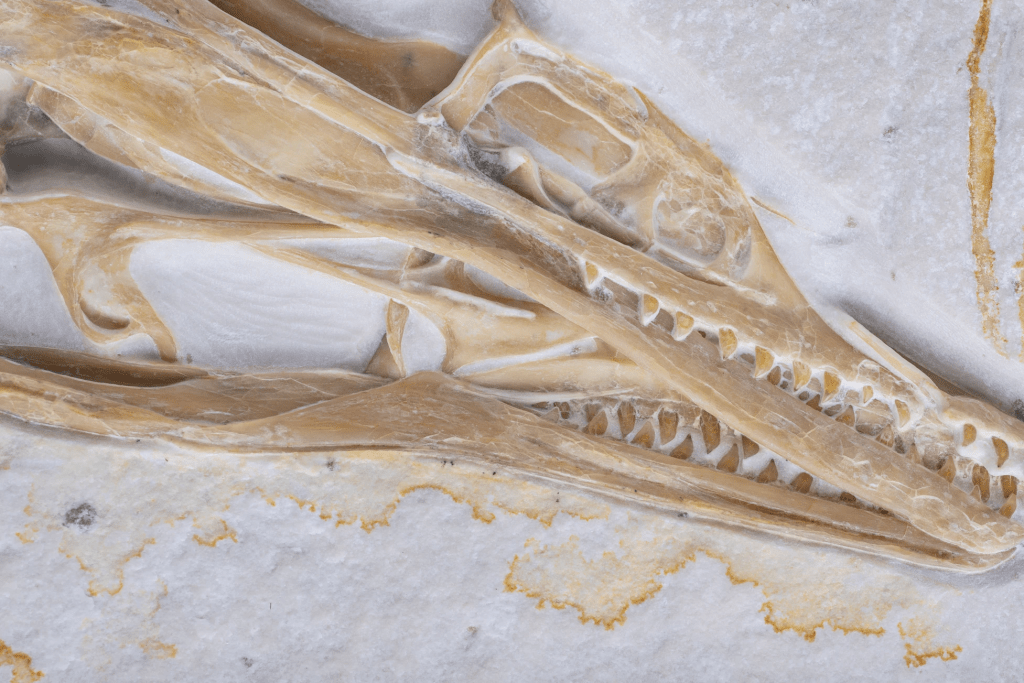
Given the pristine and complete condition of the specimen, I would be willing to bet that researchers will soon flock to Chicago for a chance to examine the specimen. To be fair, they aren’t the only ones, for this specimen is truly a must-see for any follower of paleontology and prehistory. For most living in North America, it’s location is much more accessible than the other specimen of Archaeopteryx on the continent, located at the Wyoming Dinosaur Center in Thermopolis, Wyoming.
If you do want to see the Chicago specimen, you may want to hurry. The Archaeopteryx will only be on display for a short time at the Field Museum, closing on June 9th later this year. While I’m sure the removal won’t be permanent, the fact is that researchers both at the Field and from across the world need to examine the specimen in detail before it can be displayed in a full-time capacity.
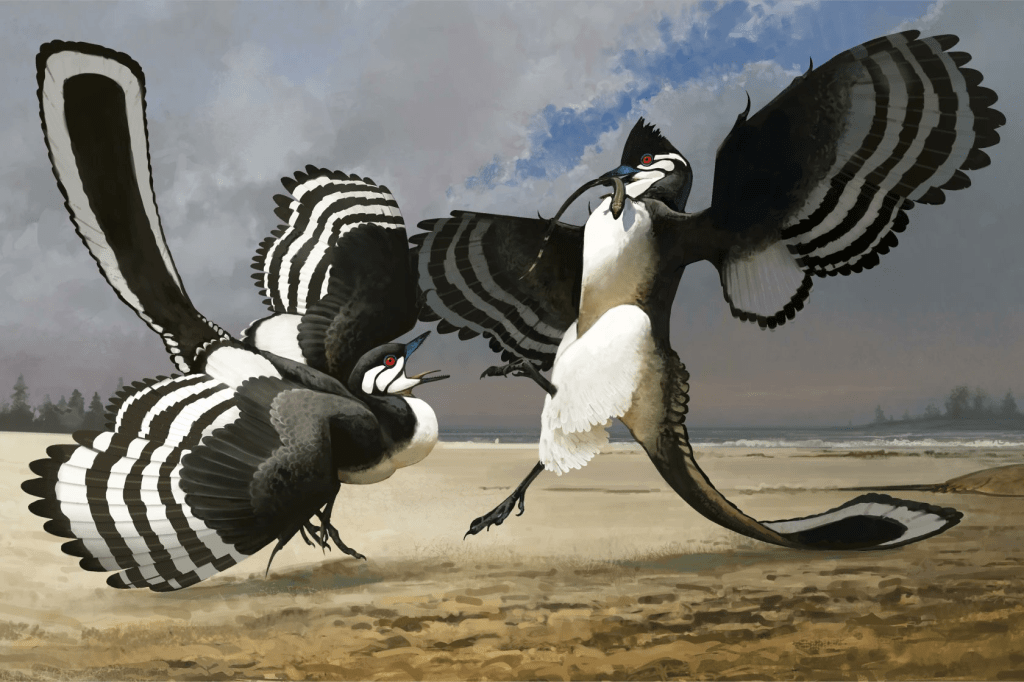
For more information, check out the Field Museum’s page about the specimen and its accompanying display, linked here.
One last note: I think it’s incredible that the Field Museum keeps managing to acquire very important fossil theropods. In the early 1990’s, the Field Museum purchased one of the largest and most complete specimens of Tyrannosaurus rex, named Sue, for over $8 million U.S. dollars. (According to her twitter, Sue apparently has apparently taken after Kendrick Lamar and has issues with the Chicago Archaeopteryx already!). Now, just over 30 years later, they have managed to acquire another crucial theropod specimen. You have to wonder if other museums are jealous…
Now, if only my Chicago Bulls could do what the Field Museum does and acquire some quality free agents! Sadly, Bulls ownership isn’t quite as willing to spend as the Field…
I do not take credit for any images found in this article. All images come courtesy of the Field Museum of Natural History and Ville Sinkkonen.
 Max's Blogo-Saurus