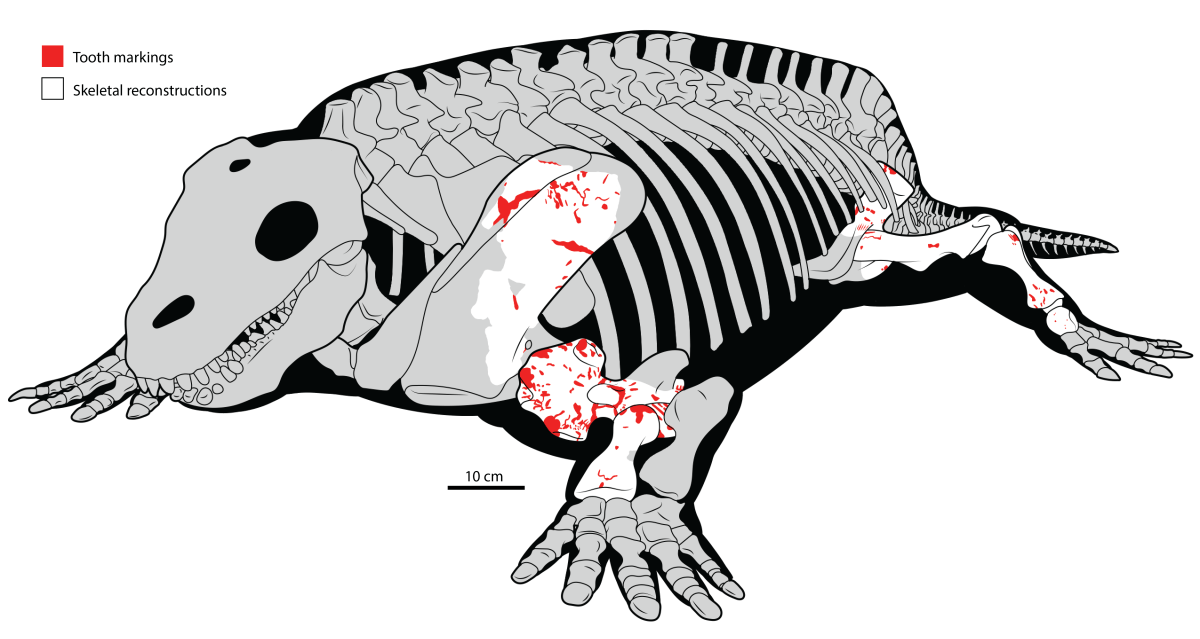
This article was written by Jordan Young, an up-and-coming palaeontologist in the Department of Biology at the University of Toronto Mississauga and a good friend of mine. It details Jordan’s first published paper, entitled, “Earliest direct evidence of trophic interactions between terrestrial apex predators and large herbivores”, which was published in Scientific Reports earlier this week. Take it away, Jordan!
Reconstructing predator-prey relationships is key to understanding how ecosystems are structured. However, direct evidence of these trophic interactions – revealing who was feeding on whom – is rare in the fossil record. Fortunately, the fossils of several stem-amniotes now offer a glimpse at the early history of predator-prey dynamics on land.
In new research led by myself in collaboration with Tea Maho and Robert Reisz of the University of Toronto Mississauga (UTM), the earliest direct evidence of interactions between terrestrial apex predators and large-bodied, herbivorous prey are described. In total, the skeletons of three young herbivores showcase multiple pathologies that are linked to predation, scavenging, and even post-mortem burrowing by arthropod larvae. Our study appears in the journal Scientific Reports at the following link.
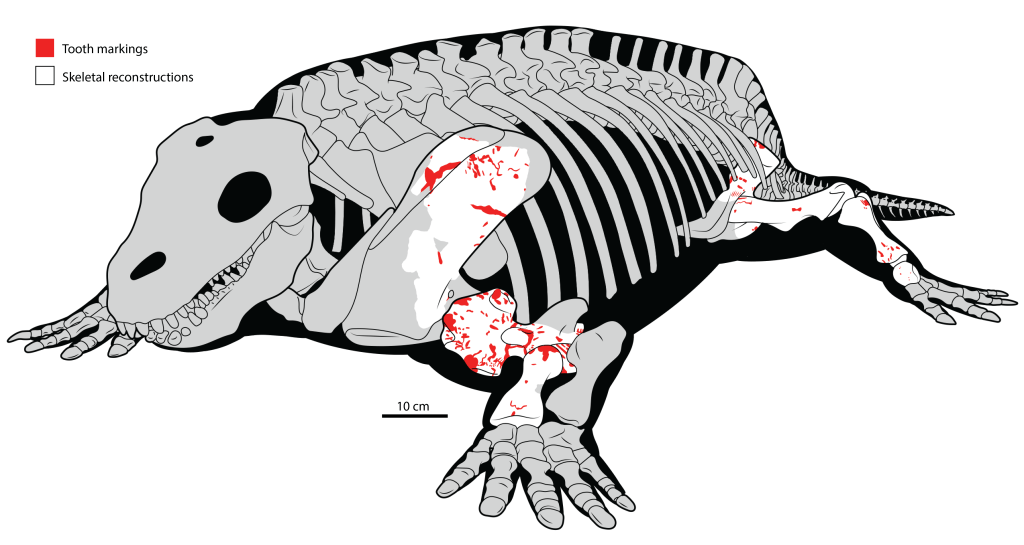
Our understanding of trophic interactions is complex. The relationships between large-bodied predators and prey in modern terrestrial vertebrates are well known to researchers, and similar interactions among Mesozoic dinosaurs and other extinct taxa of the so-called “Age of Reptiles” have been well-documented in the scientific literature. However, almost no information is available for the Paleozoic era, particularly the late Carboniferous and early Permian periods which is when terrestrial vertebrates first evolved into large apex predators and herbivores.
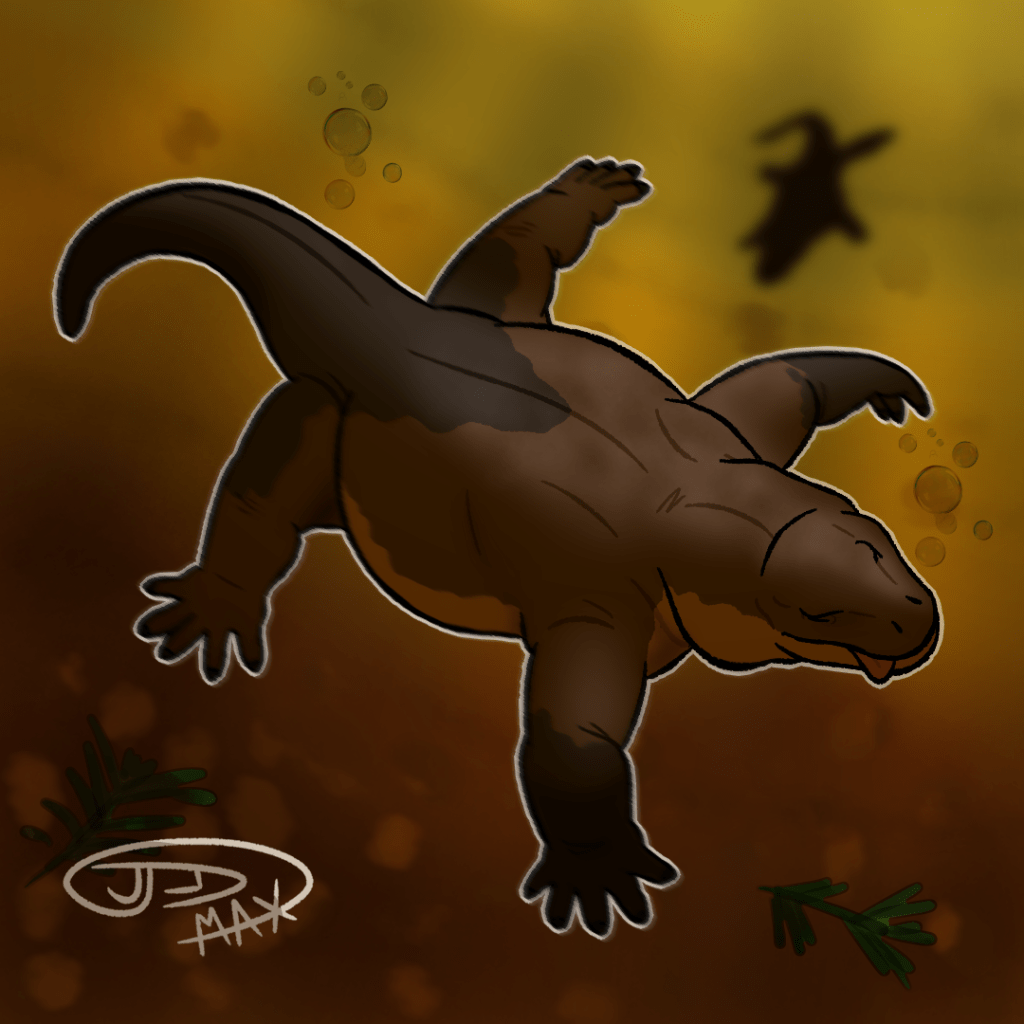
We describe the earliest trophic interactions between these ecological pioneers through well-defined tooth marks on the skeletons of three large, immature herbivores of the genus Diadectes from the early Permian of Texas. The markings are numerous and variable across the skeletal elements, with relatively superficial pitting and scoring (shallow tooth marks) on the bones contrasting much deeper furrows (cavities) and punctures. The scoring and furrowing are of particular interest, as these are indicative of predatory behaviours to strip flesh off the bones.
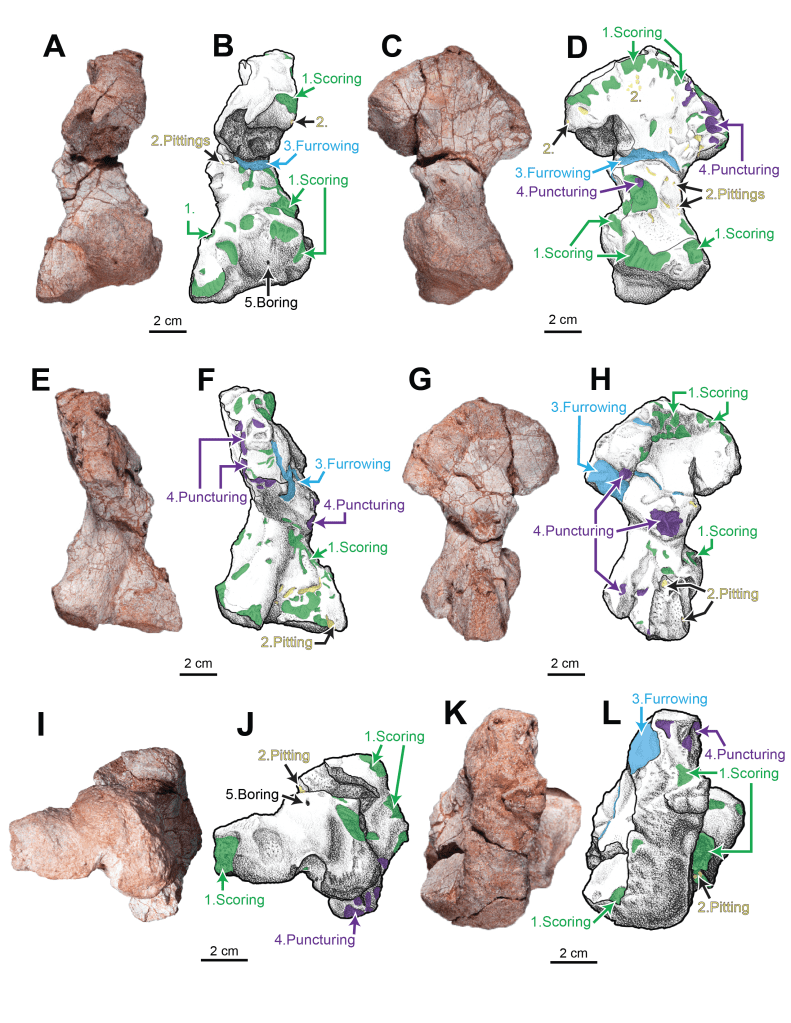
In addition, Arthropod borings – displayed as small hole penetrations likely made by insect larvae – were also found on areas where cartilaginous bone ends would be on the carcass. Based on the distribution of bite marks, soft tissues areas of the joints and narrow inter-elemental spaces were prioritized during feeding rather than more accessible, flesh-rich midsections that were left mostly untouched. As indicated by the biased distribution of bite marks towards low-nutrient regions of the skeleton, we hypothesize postmortem scavenging was present and better explains the pathologies than active predation.
This conclusion is also supported by the depositional history of the Mud Hill locality in which the Diadectes fossils were discovered. The locality’s geology and taphonomy suggests it was once an ephemeral pond, where after seasonal flooding events, bodies would accumulate and experience extensive subaerial exposure. This would have allowed ample opportunities for late access scavenging before the herbivore bones could become buried once more by subsequent floods.
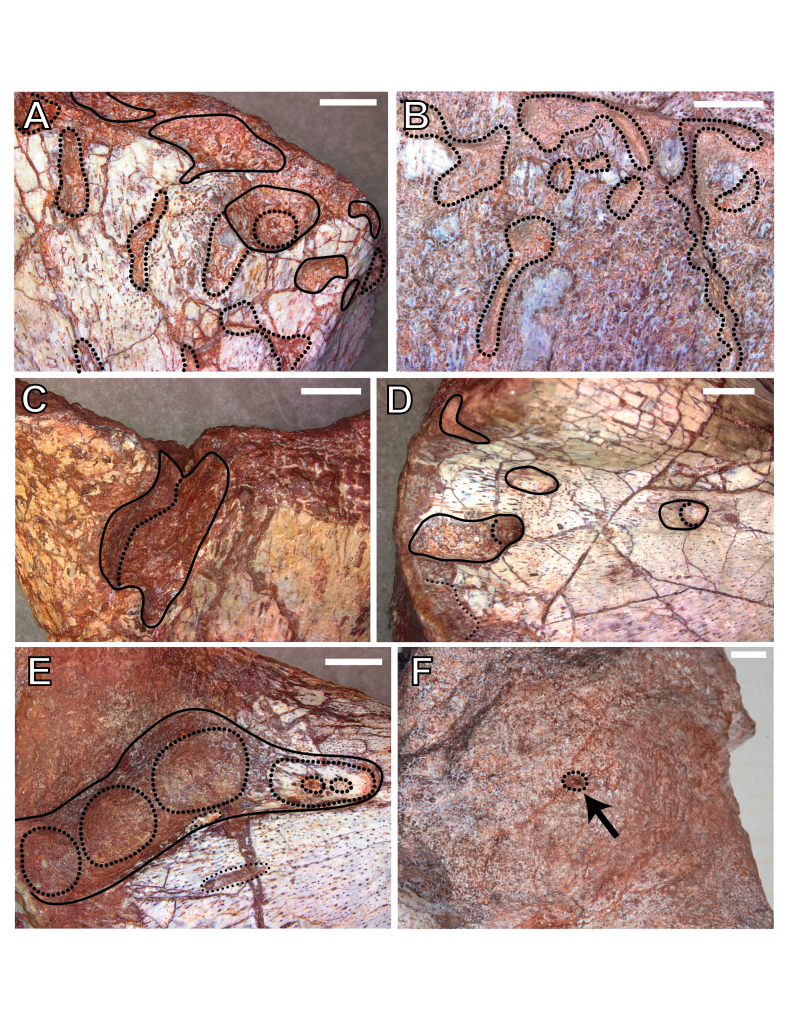
As for the scavengers, we have a good idea of the potential predators based on the size, shape, and texturing of the tooth markings (as demonstrated in my illustrations). The large predators found in this site and in nearby areas include the synapsids Varanops, a monitor-lizard sized predator; the infamous sailed sphenacodontid Dimetrodon; and, a group of palatal fanged amphibians known as the trematopids. At present, Varanops seems to be the most likely perpetrator, as not only are its bones found at Mud Hill, but their smooth, recurved teeth also match with the tooth marks found on the Diadectes bones.
These juvenile diadectid skeletons represent the oldest known example of predator-prey interactions amongst large land vertebrates. They capture a pivotal moment in Earth’s history when life on land was emerging but very different, as ecosystems were largely absent of herbivores at the base of food chains. Instead, ecosystems were built up strictly from various carnivores, both terrestrial and semi-aquatic, including insectivores and detritivores (eaters of dead and decaying organic matter) as primary consumers. As herbivory would repeatedly and independently evolve and diversify in tetrapods, terrestrial food webs became increasingly complex and furthered vertebrate terrestriality, thus setting the stage and status quo for land-based ecosystems over the past 280 million years!
Thank you for reading! I am very grateful for being able to help showcase Jordan’s terrific work on the fascinating ecosystems of the early Permian period. If you haven’t already, please read Jordan’s article at the link below:
 Max's Blogo-Saurus