For most scientific disciplines, ground-breaking changes typically result from successful experiments, field studies, or new specimens being discovered.
For the field of paleontology, one of the biggest revolutions came from the theatre.
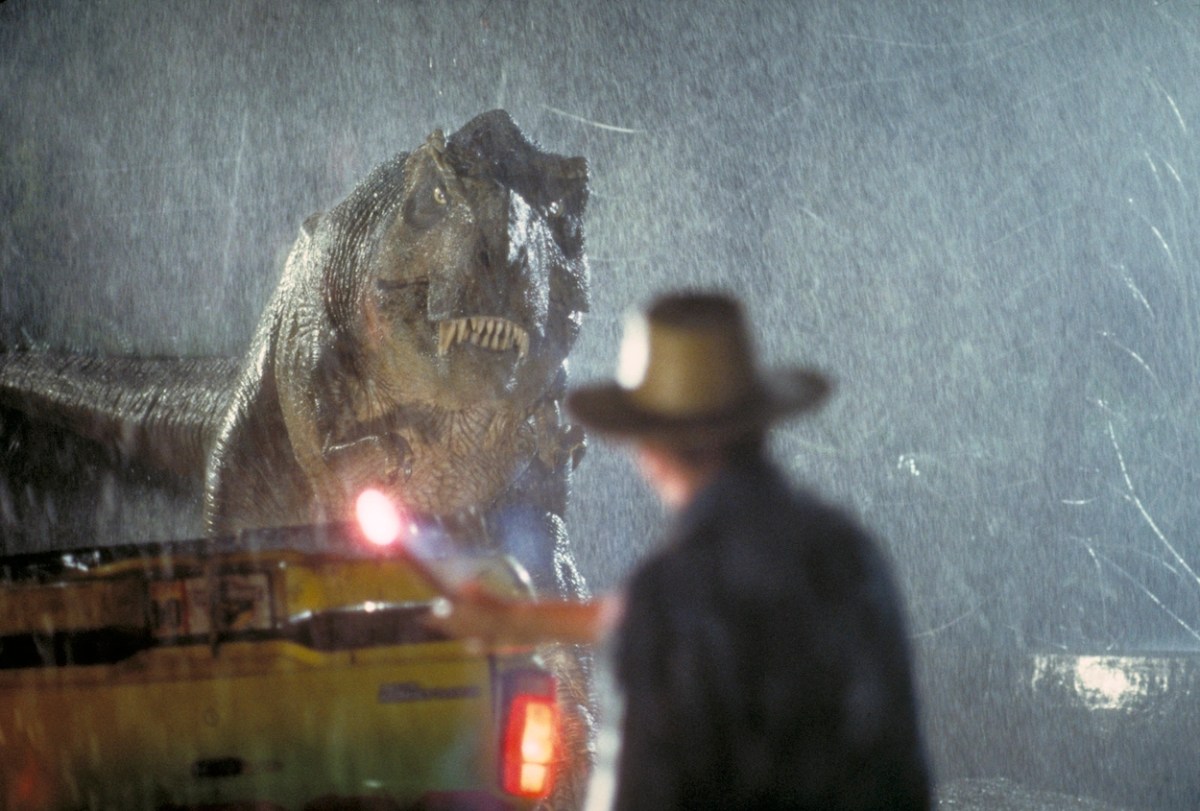
On this day 30 years ago, the first Jurassic Park film debuted in cinemas. A masterpiece from start to finish, Steven Spielberg used the groundwork laid by Michael Crichton’s novel to bring dinosaurs to life on the big screen. A thrilling critique of the ethics of genetic science in the hands of multinational corporations, Jurassic Park has changed the field of paleontology for the better. The animation of dinosaurs is nothing short of remarkable and has resulted in a massive revolution for a previously snubbed scientific field.

Indeed, Jurassic Park gave audiences the first real glimpse of real dinosaurs. Sure, pictures like the original Lost World and King Kong were some of the first movies to portray dinosaurs, but their depictions were understandably primitive and archaic. Stop motion animation turned dinosaurs like Allosaurus and Triceratops into lumbering, reptilian behemoths. Terrifying to the average audience perhaps, but it would be hard to call these early dinosaur portrayals dynamic.
Jurassic Park changed that. Gone were the swamp-dwelling megaliths, instead replaced by active, sophisticated animals. In many ways, Velociraptor – the dinosaur made most famous by the franchise – is the antithesis of the dinosaurs portrayed in previous media. For starters, it’s small; while the bear-sized Velociraptors of Jurassic Park may still dwarf Jeff Goldblum and Sam Neill, they’re tiny compared to the earliest dinosaurs portrayed in cinema.

This trend of smaller dinosaurs persisted in the franchise, notably in the chicken sized Compsognathus of Jurassic Park’s sequel, The Lost World: Jurassic Park. Instead of all dinosaurs being depicted as titans, a broader view of the dinosaur spectrum was established in the franchise’s beginning. This is more in keeping with real dinosaurs, as new studies have revealed hundreds of dinosaur species that possess the comparatively smaller statures exhibited in the Jurassic Park films.
Velociraptor was also the first glimpse of intelligent dinosaurs. In Jurassic Park, we see a pack of Velociraptor work together to lure arrogant gamekeepers into traps, open doors, and communicate with one another. While living Velociraptors may not have been as intelligent as they were portrayed on screen, paleontologists now know that dinosaurs were far from the reptilian dullards depicted in the early days of paleontology. Jurassic Park’s dinosaurs enabled future films and series like Walking with Dinosaurs and Prehistoric Planet to feature socially complex, intelligent dinosaurs. Without Jurassic Park, the transition to the “Clever Girls” may have been far more prolonged!
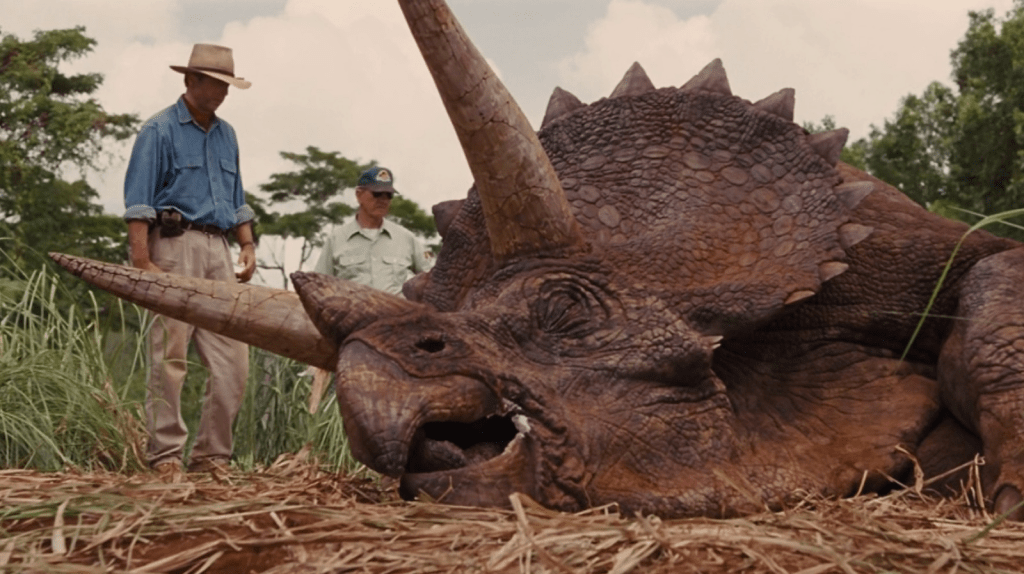
The other triumph of Jurassic Park’s dinosaurs is their authenticity. They feel like real animals, not just terrifying movie monsters. A Triceratops gets sick and has violent stomach reactions. The Velociraptors feel emotions, appearing to bicker with one another in the infamous kitchen scene and feeling animosity towards the park staff that have mistreated them. The use of real animal sounds for various species, including distinct elephant trumpets for T. rex and the sound of “excited” tortoises for Velociraptor, bring more realistic feelings to these animals. The sound design for the dinosaurs in the series is truly terrific, with some vocalizations being reused in modern productions. While making living, breathing dinosaurs may not sound to be a massive accomplishment, the brilliance of Jurassic Park laid the groundwork for future dinosaur depictions.
Beyond the on-screen dinosaurs, Jurassic Park generated significant interest in paleontology. Many younger paleontologists chose their profession based on their love for the film. Nowhere is this more apparent than in the number of dinosaurs discovered in the last quarter century, with the number of new species and specimens booming in the years following Jurassic Park’s release. Ultimately, the success of the franchise resulted in increased interest in paleontology, which has generated increased funding and thus more discoveries and scientific advancements.

While this may be speculation, the greatest impact of Jurassic Park is the proliferation of fossil hunting in non-western nations. Pre-JP, the most notable fossil expeditions in places like Africa and Asia were limited in scope and led by European and North American paleontologists. Since 1993, places like China, Argentina, and Morocco have become dinosaur goldmines with amazing local contributions, which has contributed to the massive advancement of the field. A film like Jurassic Park would have been far more accessible to people across the globe than museums in Britain and journal publications from New York City, allowing more people to fall in love with dinosaurs than ever before.
The central plot of Jurassic Park – bringing extinct animals back to life through the manipulation of genes – is something scientists have been trying to replicate in recent years. Recently extinct animals like the Australian Thylacine and Woolly Mammoths have been in the headlines recently with efforts being made to bring them back from extinction. Famously, the Chickenosaurus project – headlined by Jurassic Park advisor Jack Horner – has attempted to alter embryo chicken DNA to manipulate their appearance into that of a dinosaur. Whether these scientists understand the true message of Jurassic Park – that playing God with extinction isn’t a good thing – is questionable, but these are nonetheless fascinating projects.

My connection to Jurassic Park is more nuanced. I always acknowledged its brilliance, but it wasn’t the driving factor for my love of dinosaurs. Having said that, the franchise’s importance in my life has become clearer in recent years. Without Jurassic Park, Walking with Dinosaurs wouldn’t exist which means my favourite series Prehistoric Park probably wouldn’t exist either. Without Jurassic Park, perhaps the Royal Ontario Museum’s massive 2005 renovations to their dinosaur hall wouldn’t have happened, eliminating a contributing factor to my love for dinosaurs. On a more positive note, maybe the absence of its influence would have deprived me from the bi-annual Spinosaurus headache I get!
Jurassic Park is, and forever will be, one of the most important events in the history of paleontology. While the quality of the franchise may have tapered off in recent years, the brilliance of its original installment is unquestionable. With superb animations that still hold up, intelligent dinosaurs, compelling characters and fascinating storytelling, Jurassic Park remains the best dinosaur film every put to screen. Like its central protagonist, Tyrannosaurus rex, Jurassic Park is the tyrant king that stands atop all other dinosaur films.
So, cheers to 30 years!
I do not take credit for any images found in this article. All images are credited to Universal Pictures.
 Max's Blogo-Saurus