Whenever the English language fails to adequately describe a term, there’s always a handy German word waiting to be used.
I’m sure most people are familiar with the term schadenfreude, which refers to the joy one feels at the expense of another’s misery. For whatever reason, no term has ever been able to encapsulate the emotions of schadenfreude, resulting in a bit of vocabulary colonialism on behalf of the English language – shocking, I know.
Unsurprisingly, paleontology has its own equivalent to schadenfreude: Lagerstätte. Though it vaguely translates to ‘storage place’ in English, lagerstätte (or lagerstätten when pluralized) refers to fossil sites that are notable for their exceptional preservation quality. In a way, lagerstätten are storage places for good fossils; you can think of them as the most exclusive kind of natural storage unit.
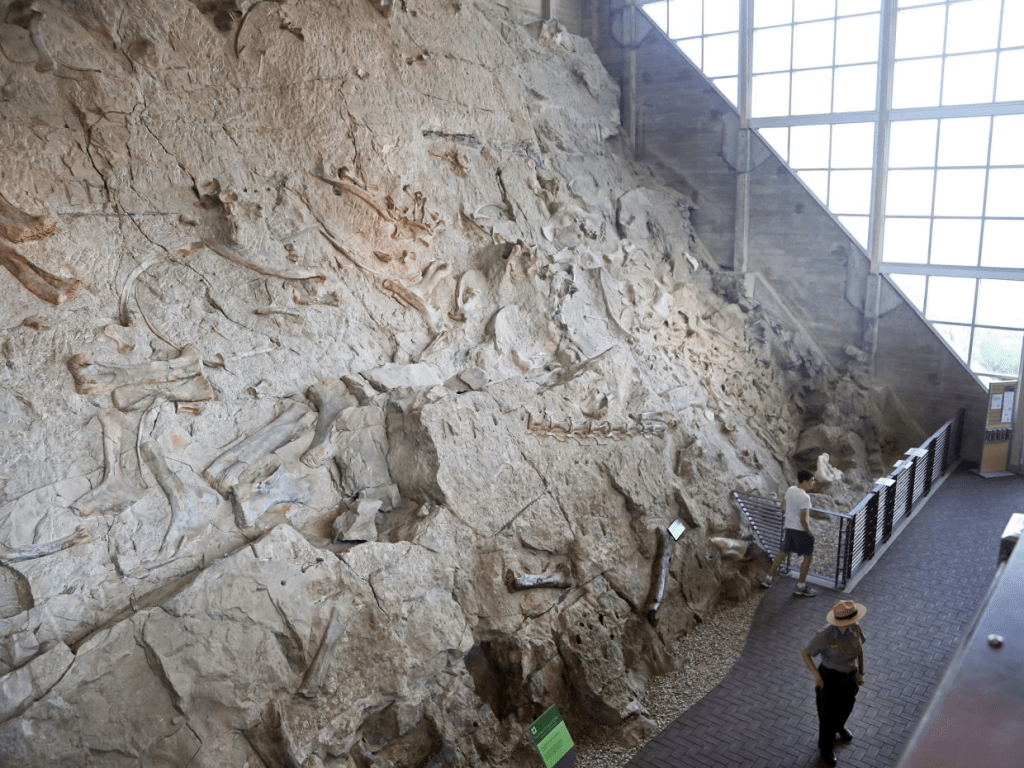
In the fossil record, two kinds of lagerstätte can be found. The first is known as Konzentrat-Lagerstätten, or concentrated lagerstätten, which typically contain a high volume of fossil content. Fossils of konzentrat-lagerstätten are often densely confined, with hundreds or even thousands of fossils present in a relatively small area. Some konzentrat-lagerstätten sites can be formed in a very short period, such as monotaxic (or single-species) bonebeds that represent a mass casualty event. One such example is the Hilda mega-bonebed located in southern Alberta, Canada, which contain thousands of Centrosaurus thought to have died in a mass flooding event during the Late Cretaceous Period. These sites tend to provide information about the life history of the species discovered, with numerous specimens allowing paleontologists to reconstruct a complete ontogenetic series.
Other konzentrat-lagerstätten form over millions of years, and thus provide more information about the wider environment and biotic community. Notable examples include the La Brea Tar Pits in Los Angeles, USA; the Pisco Formation in Peru; and the Kem Kem Beds of Morocco, just to name a few. In these areas, sediments were deposited over millions of years, allowing paleontologists to understand how both local ecosystems and wider global climates changed over large time scales.

One fundamental way that paleontologists have been able to understand this change is through the fossils preserved at each lagerstätten. When dozens or hundreds of fossil species are preserved, it becomes much easier to understand the environment in which they lived. If dinosaur, mammal, and insect fossils dominate an early assembly, odds are you were in some kind of terrestrial environment. If those fossils suddenly become replaced by those of sharks and marine reptiles, a marine transgression has likely been captured in the rocks of the area. Such transitions of both environmental and ecological communities have been observed in many different konzentrat-lagerstätten, providing a clear view of how the earth has changed over time.
The second type of lagerstätten is known as Konservat-Lagerstätten, which are sites notable for their excellent quality of preservation. This typically involves the preservation of soft tissues, including skin, muscles, feathers, fur, and even internal organs. Much of our knowledge from the early history of multicellular life comes from konservat-lagerstätten, as their lack of bones and hard-tissues meant that konservat-lagerstätten were the only locations that could preserve their remains.

While all konservat-lagerstätten are defined by their preservation of soft tissues, this can occur in several different ways. In the Tiaojishan Formation of Jurassic China, frequent volcanic eruptions led to the burial of local fauna and preservation of feathers. In several different localities, an anoxic environment in a marine setting prevented decomposition, allowing soft tissues to survive long past their normal desiccation period. At the Eocene Messel Pit of central Germany, periodic carbon dioxide plumes suffocated nearby fauna and flora. Other sites are thought to have formed by rapid burial, poisoning, and more.
Besides the events leading to fossilization, the actual fossilization process can vary tremendously between konservat-lagerstätten. Depending on the locality, fossils have been documented as being formed by phosphate, pyrite, carbon, silica, calcite and even opal. Some konservat-lagerstätten feature biota trapped in amber, while others – like the Mazon Creek beds in Illinois, USA – are encased by rock nodules that protect the fossil within. The type of fossilization is largely depending on the geological setting of the site during prehistory, resulting in a vast array of different fossil types.
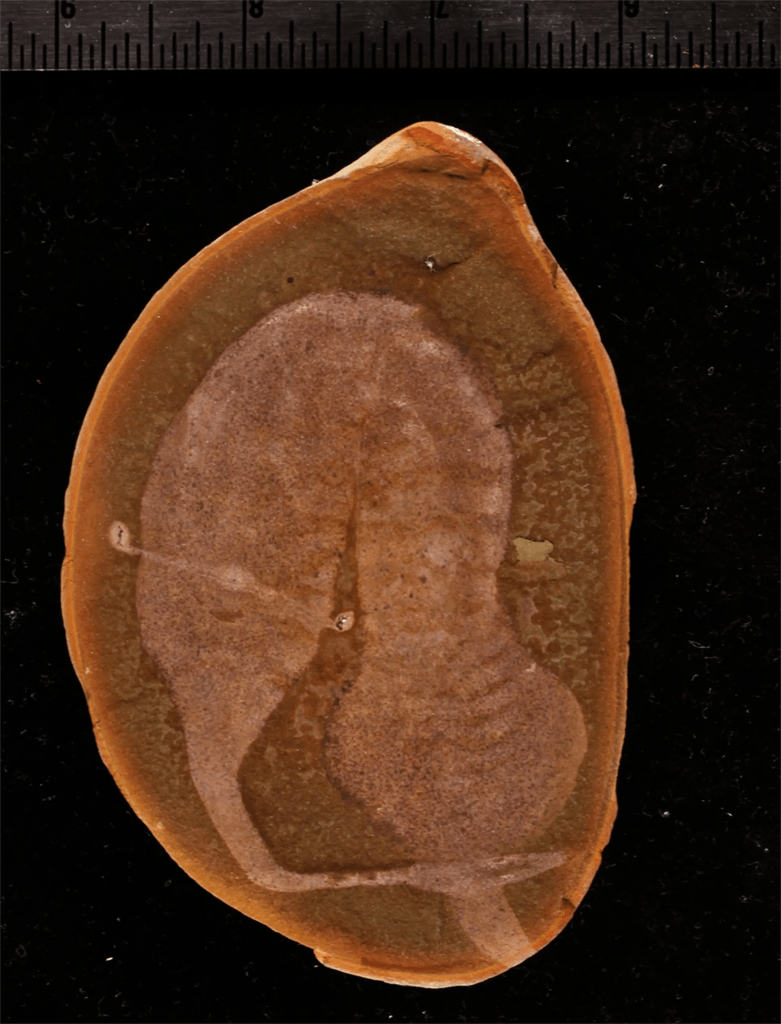
Though both types of lagerstätte have shaped our understanding of prehistory, it is konservat-lagerstätten which are more important. Without konservat-lagerstätten, we would have no way of knowing about the Cambrian Explosion and the diversification of multicellular life during the early stages of the Paleozoic. Nor would we know about the Ediacaran biota, an even more primitive collection of organisms that called the primordial oceans home. We wouldn’t know that most dinosaurs were feathered, or that giant sea scorpions terrorized early chordates. Without konservat-lagerstätten, the soft history of earth would be almost completely lost to time.
Fortunately, such sites are surprisingly plentiful.
There are many lagerstätte of both varieties throughout the world. Many can be found in the United States and China, primarily since these countries have been more thoroughly explored than others. Germany has quite a number too; rather fitting for the country that pioneered the term. While there are too many to list here, the link below will take you to an awesome map of all the notable lagerstätte found throughout Earth:
https://maphub.net/FossilBonanza/Lagerstatte
Having said that, below is a small list of some of the most famous. Sorted by type of lagerstätte, the following list will also feature some information pertaining to each site. Odds are you’ve probably heard of some; they are the best places to find fossils, after all!
Konzentrat-Lagerstätten
Ashfall Fossil Beds, USA: The most tragic entry on our list, volcanic eruptions in Nebraska suffocated many ancient mammals, most notably a herd of ancient rhinos known as Teleoceras.
Dinosaur Provincial Park, Canada: Located in southern Alberta, over 40 species of Late Cretaceous dinosaurs have emerged from the rocks of this UNESCO world heritage site.

Kem Kem Beds, Morocco: The home of Spinosaurus and other Mesozoic fauna, Kem Kem has become famous for the quantity of both marine and freshwater fauna found throughout its rocks.
La Brea Tar Pits, USA: Located in the heart of downtown Los Angeles, the La Brea Tar Pits were once a predator trap during the Pleistocene, resulting in a diverse assemblage of both living and extinct fauna.
Pisco Formation, Peru: Though this formation is located inland, fossils of many marine animals – including sharks, whales, penguins, and even sloths – have been discovered at Pisco.
Konservat-Lagerstätten
Burgess Shale, Canada: Perhaps the most important fossil site on the planet, thousands of animals that lived during the Permian Explosion – including the earliest chordates – have turned up at this mountainous British Columbia locality.

Jehol Biota, China: Comprising several geological formations, the Jehol Biota of northeastern China preserves many fossils from the Early Cretaceous period, including the world’s largest collection of feathered dinosaurs.
Joggins Fossil Cliffs, Canada: Located on the Atlantic coast of Canada, Joggins preserves some of the worlds earliest tetrapods in the stumps of massive Carboniferous trees.
Messel Pit, Germany: During the Eocene, carbon dioxide plumes suffocated the flora and fauna of an ancient Lake, resulting in the preservation of hundreds of invertebrates, mammals, birds, and more.

Solnhofen Beds, Germany: Once a coastal lagoon during the Jurassic, Solnhofen preserves many different soft-bodied marine organisms as well as the first bird Archaeopteryx.
Thank you for reading this article! Sometimes it’s nice to get away from actual dinosaurs and do a more technical or concept-based article. Paleontology is more than just memorizing dinosaur names, after all; sometimes we forget it is as much a geological science as it is a biological one!
I do not take credit for any images found in this article. All images come credit of the sources accompanying each image.
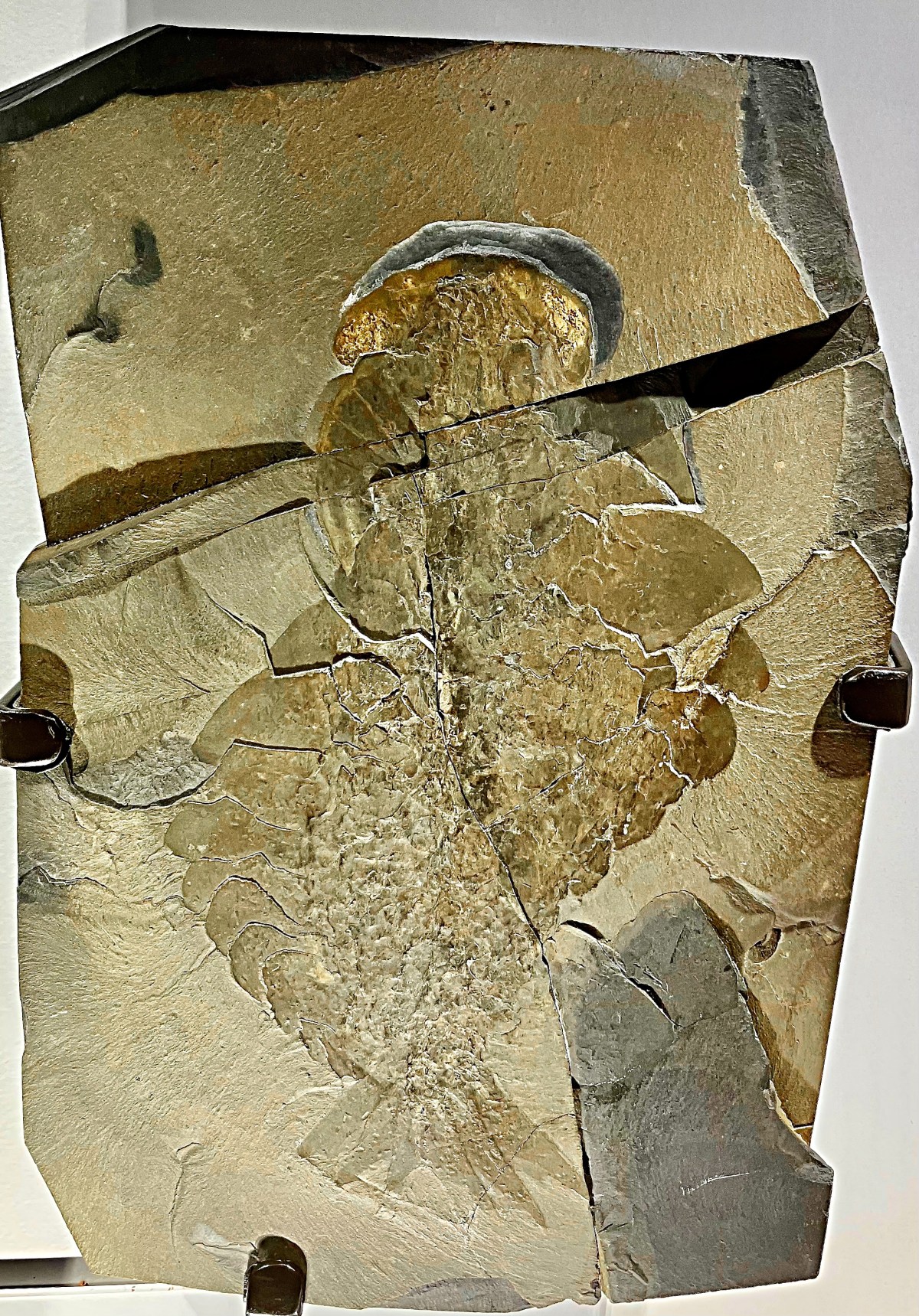
Header image courtesy of Max’s Blogosaurus, taken at the Royal Ontario Museum.
 Max's Blogo-Saurus
2 replies on “Die Fossilien Sind Gut: The Importance of Lagerstätte in the Fossil Record”
Hi Max….just letting you know how much l enjoy your informative emails….l am 71 and though l love all things of fossil and prehistoric nature l know very little…..so l will keep on reading and learning as long as l can. Many Many thanks from Robert in Australia
LikeLike
Hi Robert – glad to hear you are enjoying my content! If there are any topics you would like to hear me write about, I’d love to make something work.
LikeLike