After the dull but slightly comedic experience of Jurassic World: Dominion, my hope for the Jurassic Park franchise was pretty low.
But today is a new day, one that has brought slight optimism back to my heart.
The first trailer for Jurassic World Rebirth was released to much fanfare from the online paleontology community. In the two-and-a-half-minute-long trailer, we learn the plot of Rebirth, become acquainted with several of its main characters, and get a sneak-peak at several new and returning prehistoric animals, including a strange “mutant” creature that appears to be a major threat to the protagonists.
The reaction of the online paleontology community has been mixed. While some have praised the new designs for dinosaurs like Spinosaurus and Tyrannosaurus rex, others have cited noticeable issues in their anatomy as cause for concern. The plot represents another source of division; the return to an island setting, an obvious callback to the original Jurassic Park, feels refreshing to some but overused to others.
So, which viewpoint is right?
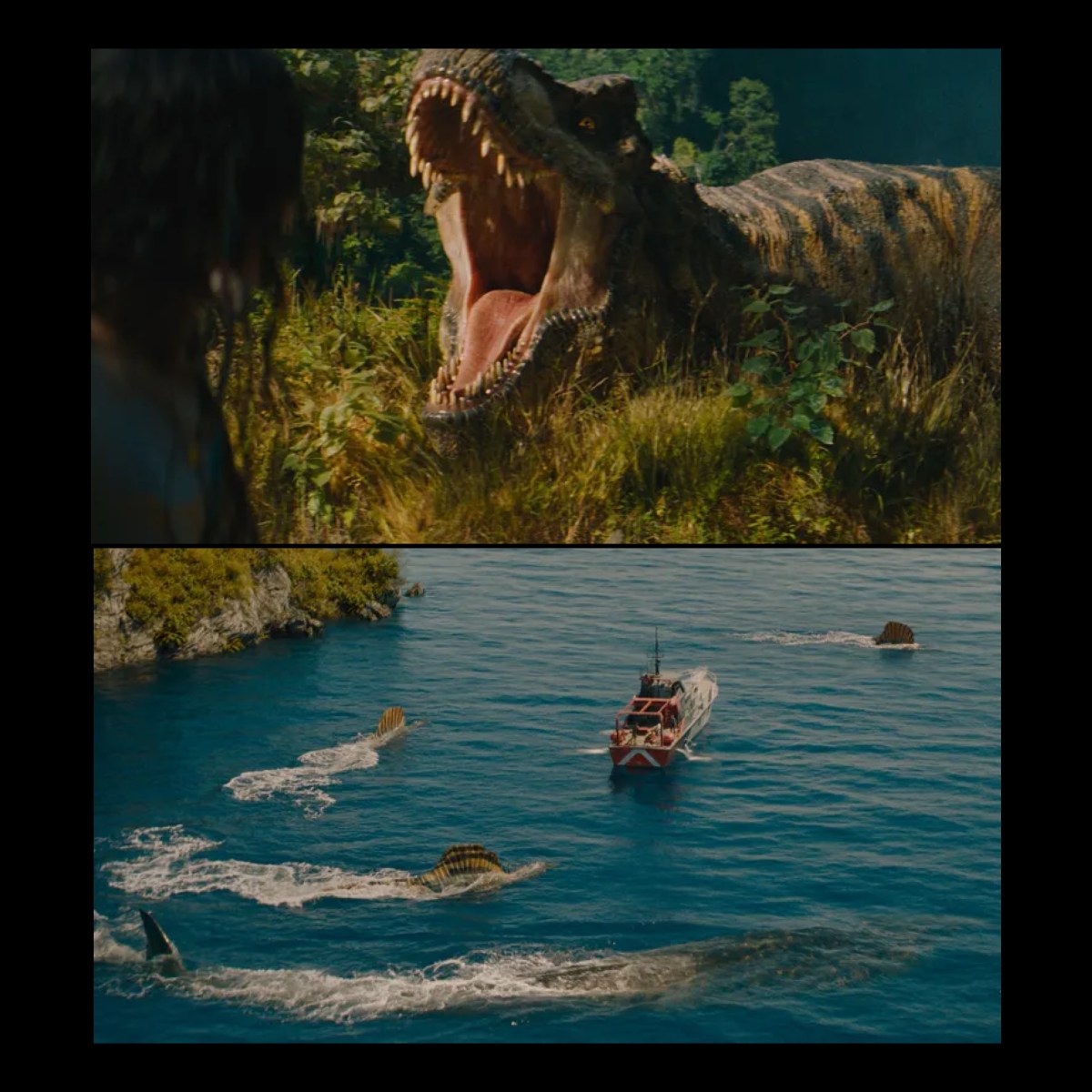
Let’s start with the positives. First, the new designs for returning dinosaurs are cool. Look no further than Rebirth’s Tyrannosaurus rex, who in one frame displays more vibrancy than any dinosaur featured in the entire Jurassic World trilogy:
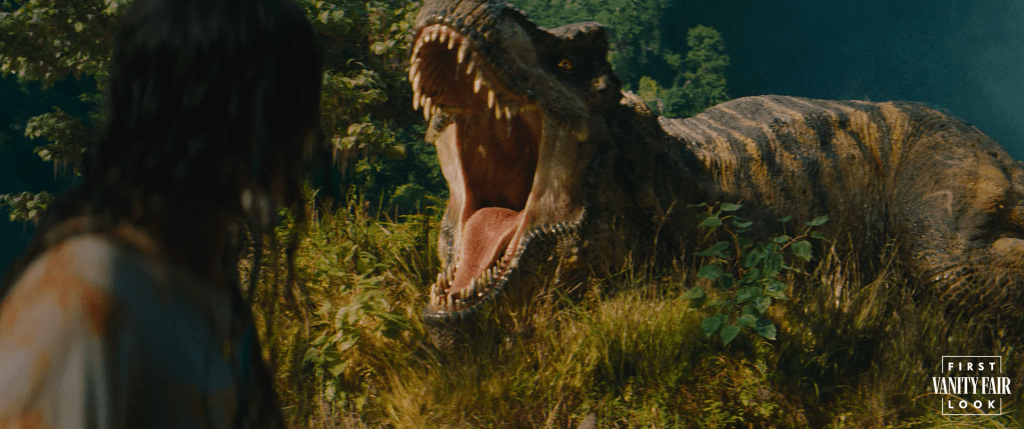
The attention to detail and quality of animation on the Tyrannosaurus rex are incredible. People have pointed out the large, iguana-like scales decorating its mouth and seemingly keratinized headgear above its eyes, but I cannot get over the black-and-gold stripes running down its back. This franchise has always seemed determined to use the blandest colour palates for its dinosaurs even as animation techniques have improved and paleontologists have deciphered the real, exceedingly stunning colours of dinosaurs.
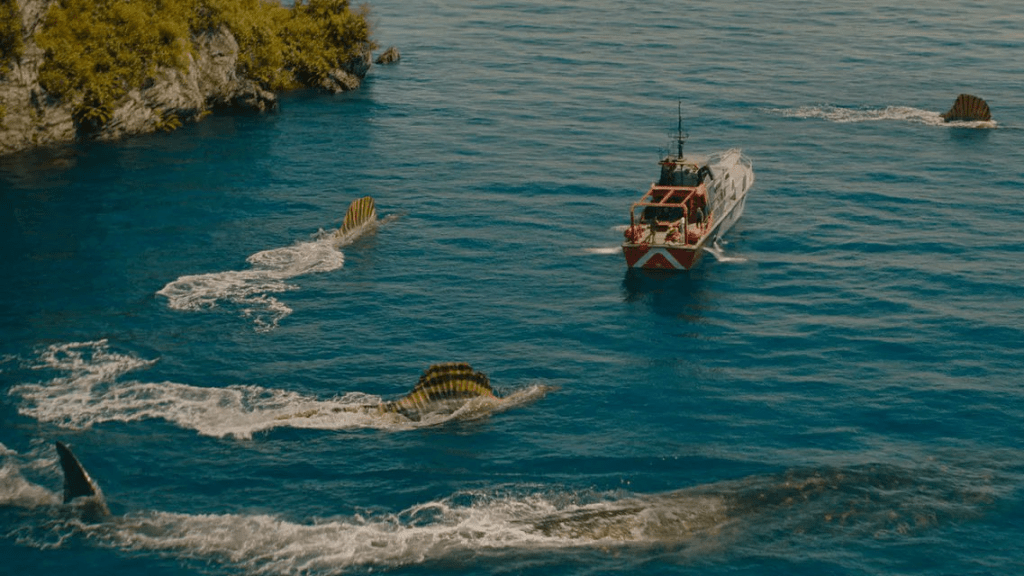
Ditto for the Spinosaurus and Titanosaur. The design of the Spinosaurus group circling a boat – which I will refer to as a “raft” of Spinosaurus – clearly took inspiration from several National Geographic Spinosaurus publications. The Titanosaurs also have clear sources of inspiration, though not from external media; instead, the artistic team borrowed elements from other sauropods to complete their design. The tail shows clear affinities with Diplodocids, whereas the miniature sails present on the neck and hips are akin to those of South American taxa like Amargasaurus and Bajadasaurus.

That doesn’t mean the designs have all been received so positively, however. The seemingly wonky skull shape of Spinosaurus has gotten its fair share of criticism, and I will concede that it is far from perfect. The ear opening appears to be far too large, the neck is far too short and bulky, and a lot more creativity could have been used in the crest and colouration. The head of the Titanosaur has also been criticized, though I have less of a problem with this given that Titanosaur skulls are notoriously rare and that the Rebirth design does bear a passing resemblance to genera like Malawisaurus.
It is disappointing to see a bland, uninspired Spinosaurus face after seeing the potential in Tyrannosaurus rex. Despite this, I remain optimistic about the dinosaur designs. The early promotional imagery shows clear improvement from the greyscale dinosaurs that defined the Jurassic World trilogy. For a franchise that has stubbornly refused to change the appearance of its dinosaurs in any meaningful way for over 30 years, small changes should be cause for celebration. At the very least, we can expect Jurassic World Rebirth to be a more visually appealing film than its predecessors!
My outlook on the plot is less optimistic. I agree that the premise of “returning to the dinosaur island because of convoluted story reasons” has become exhausted in the franchise, with films like The Lost World: Jurassic Park and Jurassic World: Fallen Kingdom exploring similar ideas.I can’t help but feel that the “lost world” trope has run its course in cinema; as I am currently writing a titanic article about The Lost World, the original hidden-world-full-of-dinosaurs film, it’s hard to ignore how diluted the concept has become since its roots at the start of the 20th century.
Even more disappointing is the departure from the best storyline of the Jurassic World franchise. The ultimate failure of the trilogy, particularly its third installment Dominion, is that it couldn’t turn the premise of wild dinosaurs living in the 21st century into an interesting product. Instead, we got convoluted storylines about clone girls, crop-eating locusts, and the negative chemistry of Chris Pratt and Bryce Dallas Howard. Instead of following up on the plot of dinosaurs living in an anthropogenic world, Rebirth has gone the opposite direction, providing a disappointing conclusion to the most compelling narrative of the Jurassic World franchise.
Speaking of the failures of Jurassic World, another plot point featured in Rebirth I could have done without is the clone/mutant creatures. I am a firm believer that you can craft a compelling dinosaur-based narrative without having to add any drastic twists to the dinosaurs. When the first Jurassic World came out, 12-year-old me found the premise of a dinosaur hybrid amazing. 21-year-old Max could not care less, especially as the hybrid in Rebirth doesn’t appear to be a dinosaur at all:
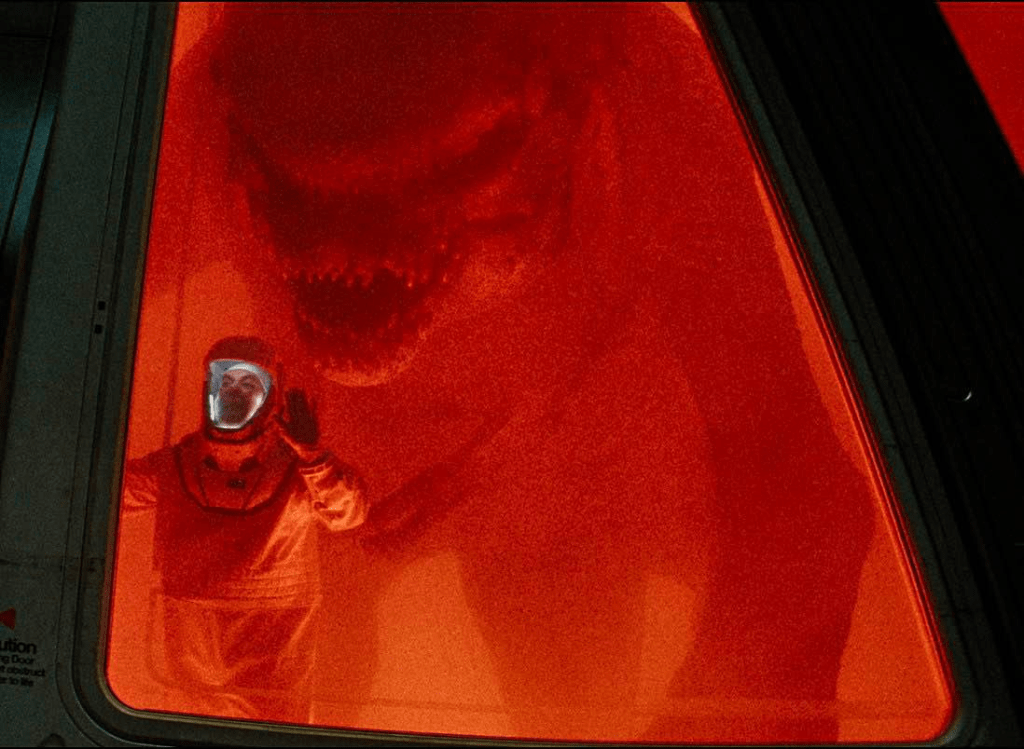
A certain Max’s Blogosaurus correspondent (cough, Oliver) pointed out that it looks like the future predator in Primeval, and now I hate it even more. No offence Primeval, but if you have no haters on this planet, it means something terrible has happened to me!
Was Universal afraid that a film that featured “plain” dinosaurs would fail at the box office? I hope not; after all, Dominion managed to rake in over 1 billion dollars worldwide, and that film didn’t feature any mutants, hybrids, or other strange amalgamations[i]. Sure, it had the worst box office numbers of the three Jurassic World films, but that had to be expected, given that sequels usually do worse than their predecessors[ii]. In any scenario, the fixation of the Jurassic World films on hybrid dinosaurs has become overdone.
Now, time for the real question: should paleonerds care about Jurassic World Rebirth? I think so. From the early images, it’s clear that Rebirth has taken steps to improve from its predecessors, with more vibrant dinosaur designs providing a stark contrast with other Jurassic World films. While I may not love the direction the story is taking, I believe that director Gareth Edwards (Rogue One, Godzilla) is a talented and capable filmmaker. The presence of Steve Brusatte as advisor is also encouraging, though sometimes Hollywood has a bad tendency to ignore scientific advice…
Only time will tell if Jurassic World Rebirth can recapture the magic of Jurassic Park. Until then, we paleonerds must anxiously wait!

I do not take credit for any images found in this article. All images come courtesy of Universal Pictures. Jurassic World: Rebirth will debut in theatres on July 2nd, 2025/
For a review of Jurassic World Dominion, check out the following article here at Max’s Blogosaurus: https://maxs-blogo-saurus.com/2022/07/24/dino-docs-jurassic-world-dominion/
Works Cited:
[i] https://www.imdb.com/title/tt8041270/
[ii] https://www.businessinsider.com/why-the-third-film-in-a-trilogy-almost-always-sucks-2020-5#:~:text=The%20answer%20seems%20obvious.,times%20more%20than%20its%20budget.
 Max's Blogo-Saurus
One reply on “Jurassic World Rebirth Trailer: Should Paleonerds Care?”
[…] For my full thoughts on the Jurassic Rebirth Trailer, read the following article here at Max’s Blogosaurus: https://maxs-blogo-saurus.com/2025/02/06/jurassic-world-rebirth-trailer-should-paleonerds-care/ […]
LikeLike