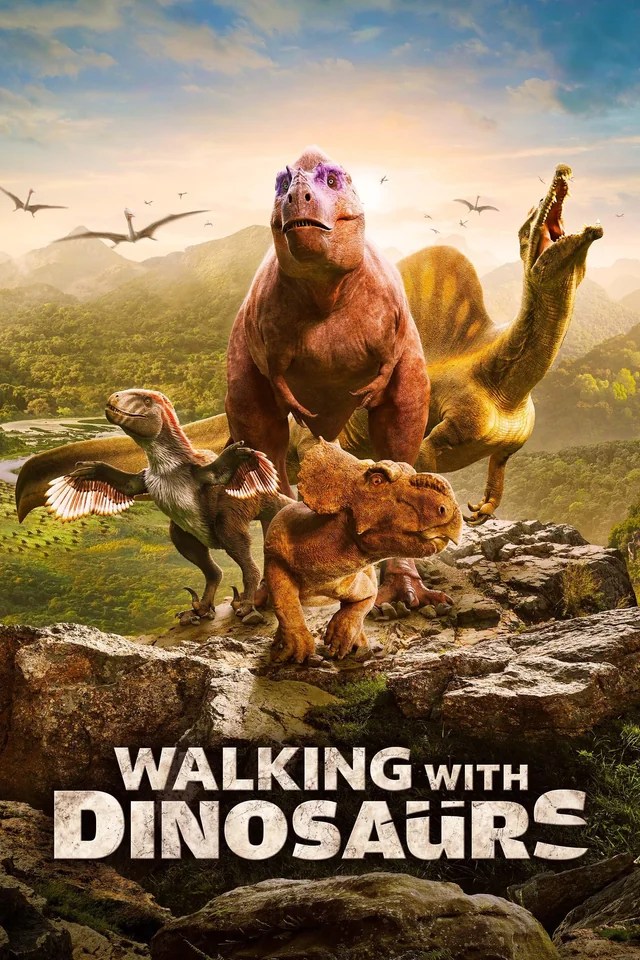
The age of dinosaurs is back! On May 25th, the much anticipated second series of Walking with Dinosaurs (WWD2025) was released to BBC One and iPlayer in the United Kingdom. Though I’m not from the UK, I managed to channel a bit of trickery – we’ll call it a “digital detour” – to watch it before it’s official release here in Canada. What can I say? I inherited impatience from my grandmother!
To quickly summarize my viewing experience, I enjoyed WWD2025 and would recommend it, though I understand why it has received its fair share of criticism. This article will dive a bit deeper into my thoughts, including details regarding the format of the six episodes, what impressed me, and how it compares to the original Walking with Dinosaurs series (henceforth referred to as WWD1999). I get that not everyone is as eager as I am to dive headfirst into spoilers, so don’t worry; I’ll do my best to keep things spoiler-free here. If I do navigate towards spoiler territory, I’ll give you a big, flashing heads-up. For now, kick back and enjoy this spoiler-safe review!
Each episode of WWD2025 follows a simple format: a team of paleontologists have uncovered a remarkable new dinosaur specimen and are attempting to recreate the story of its life, one bone at a time. To do so, WWD2025 utilizes a mixed media documentary style which incorporates footage of paleontologists working at active quarries alongside animated footage of the dinosaurs being excavated. This forms the basis for a narrative of how the dinosaur ended up encased in rock and discovered millions of years later.
When this format was first announced, I was scared it would lean too heavily towards the use of a talking-head style of presentation in which paleontologists explain the science behind the series within the halls of an empty laboratory. There isn’t anything inherently wrong with this format, but I find it can be dull and results in a disconnect between the audience and the paleontologist on screen. Talking head-style interviews require formal interviews with pre-set questions, thereby removing the spontaneity and warmth that make the viewer feel a genuine connection with the paleontologist.
My concerns were misplaced, as WWD2025’s exploration of field work in paleontology is unique from previous works. Instead of an interview-style format, the camera crew follows the paleontologists who are actively unearthing and preparing bones in the field. In the process, discussions and theories exchanged between paleontologists are recorded, thus leading to important information being conveyed to the audience. This format creates a more natural and comfortable connection between the audience and the paleontologists working on their craft. Admittedly, the sense of spontaneity is not fully consistent throughout the series, as there are moments in which the authenticity of discovery feels a touch more guided than organic. Still, experiencing this sense of exploration at all is rare and refreshing in a paleontological documentary.
Indeed, it feels as though the audience has been given access to the most sacred and important workings of paleontology. Whereas interview-style documentary interviews can make it seem as though only a fraction of the curtain is being pulled back, WWD2025’s unique presentation of paleontological science removes the curtain entirely. Getting to see important findings as they happen creates a sense of immersion that is hard to recreate. It’s one thing to hear a paleontologist explain afterwards how a dinosaur was discovered and why it is important; it is another to experience it alongside them. My hope is that this format will result in a greater appreciation for scientists in the field.

The blending of the field footage and animated dinosaurs is effective in most instances. Close-ups of dinosaur bones in the field seamlessly transition into dinosaurs roaming river valleys or pterosaurs soaring the airways of Mesozoic Earth. Though not every transition is perfect, it never feels as though the jump from past to present or vice versa is unwarranted. Every cut to the field crew reveals new information that is often essential to explain why paleontologists believe each dinosaur behaved the way they are presented in the series.
On the topic of contextualizing stories, the narratives presented for each dinosaur are of high quality. By focusing on the life and ultimate demise of a single individual, WWD2025 engages you with the subject dinosaur on a level not experienced by most other paleomedia. The only other program I can recall that approaches the effectiveness of WWD2025 is Dinosaur Planet, yet WWD2025 triumphs in its ability to garner emotions for the dinosaurs presented on screen. The stories skillfully build suspense by making you care deeply about the dinosaurs, ensuring that each ending carries with it real emotional weight. I would go so far as to say that one episode is genuinely one of the most touching works of paleomedia I have ever seen!

Of course, that’s not to say the storytelling is flawless. Some narratives have been recycled, including two similar storylines utilized in two separate episodes of WWD2025. (SMALL SPOILER ALERT) For example, watching Pachyrhinosaurus migrate for the ninth or tenth time – regardless of how awesome the stubby-nosed ceratopsians are – can wear on even the most devoted fan (SPOILER END). Having said that, the inclusion of updated scientific research within familiar narratives helps keep the series feeling fresh enough.
The dedicated focus to a single individual represents the biggest departure from the original Walking with Dinosaurs series. While each episode of the 1999 original loosely followed the life of one animal, such as an Ornithocheirus male in episode 4 Giant of the Skies, the presentation felt like it was built around the ecosystem first. Every element of the environment, from the thawing of polar insects to the appearance of flowering plants, was presented in painstaking detail, with the dinosaurs being presented as small pieces of an ever-changing world. However, in WWD2025, the environment of each episode is presented through the lens of the featured dinosaur, with only details directly relevant to that species explored in depth.
The individual-focused storytelling comes at the expense of the broader ecological context which gave WWD1999 its unique lens. The dedicated, immersive world-building of WWD1999 is part of what sets the series apart from other works of paleomedia – the viewer was able to experience not just the dinosaurs, but also the rich, interconnected world that they inhabited. We truly “walked with dinosaurs,” whereas the mixed-media approach of WWD2025 results in a reduced sense of immersion. I would argue that WWD2025 excels at presenting current paleontological research, or ‘walking with paleontologists,’ rather than the dinosaurs themselves. That said, highlighting the scientists behind the discoveries is crucial – not only for making the research more accessible, but also for raising the profile of the field of paleontology more broadly.

Another notable change between the 1999 and 2025 installments is the overarching transitions and storytelling between episodes. In WWD1999, we follow the story of dinosaurs from beginning to end, with multiple stops presenting the peaks of the dinosaur’s reign along the way. Though the tone, subjects, and score are different in each episode, overarching themes and narratives connect each location effectively, leading to a sense of flow between the episodes.
WWD2025 is different in this aspect. Little narrative structure or tonality is present between episodes, with each installment distinct from those that come both before and after it. On one hand, greater cohesion may be preferred to create a more natural flow when watching the series in one sitting. Yet, the separation of the episodes has its strengths too, namely that each installment feels like a short film that can be viewed in isolation. The question of whether each episode feels distinct enough is ever-present, but I believe WWD2025 to be a good programme to enjoy at your leisure without pressure to binge watch to excess.
Also contributing to the cinematic vibe is the beautiful camerawork and cinematography of the series. Beautiful landscape shots and framing of paleontologists in the rugged badlands of field sites across the world leads to several stunning visual moments and perspectives. You really get an amazing sense of what kind of places paleontologists are working in, whether it be the forests of northern Alberta or the deserts of Morocco.
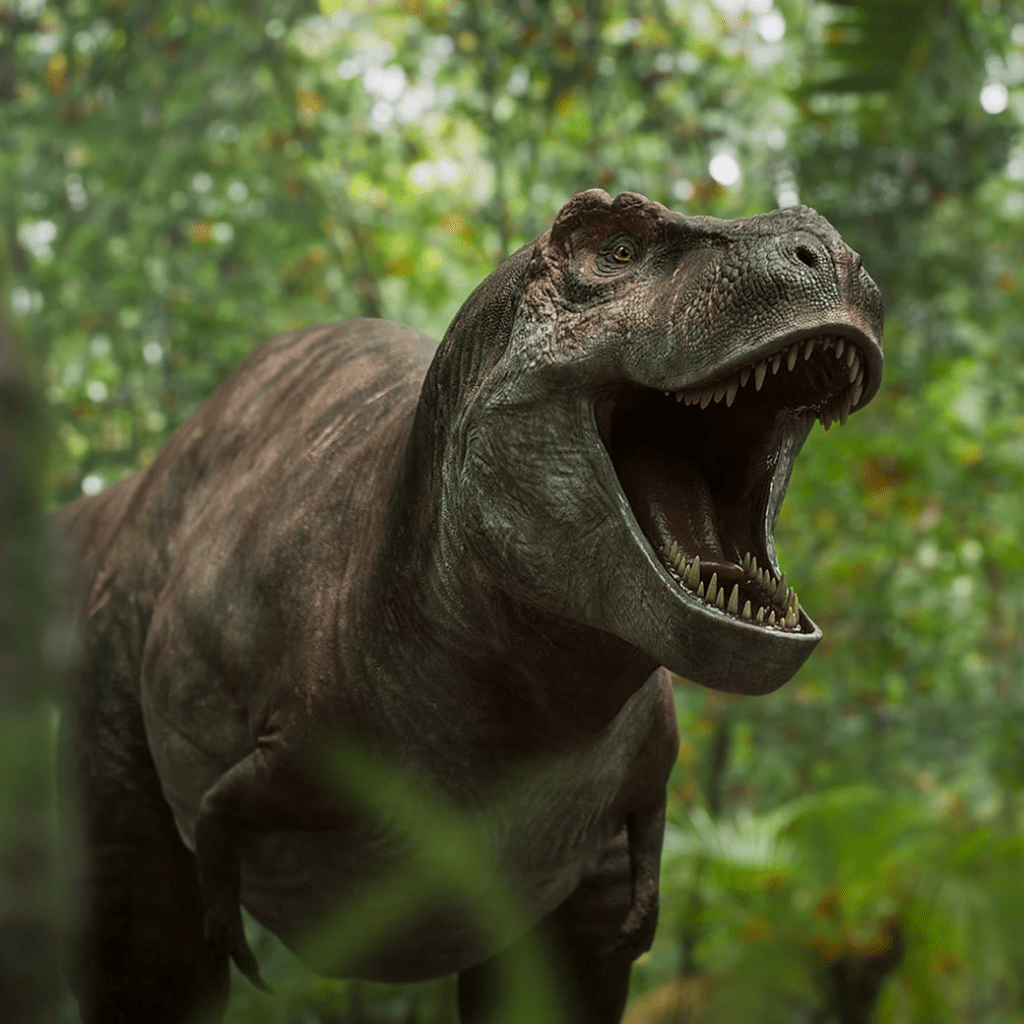
Now, on to the dinosaurs themselves. It isn’t a stretch to say that WWD2025 features some of the most scientifically accurate dinosaurs presented to date, with each species designed in remarkable detail that reflects our current understanding of their true appearances. It’s clear that the paleontological advisors of the series – recurring experts Thomas Holtz, Scott Hartman, and Stephen Brusatte, plus the many guest advisors – guided the design team well with their expertise.
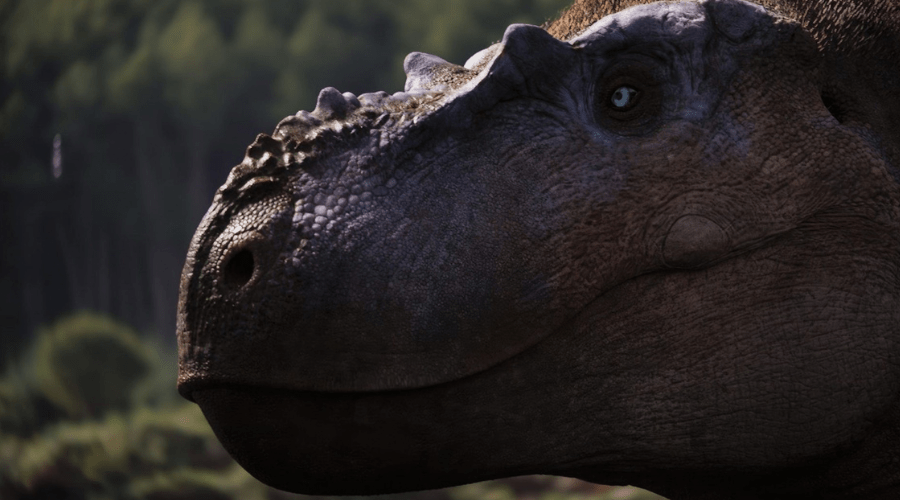
SPOILERS: I was particularly impressed with the appearances of the theropods featured in the series. The Albertosaurus and Carcharodontosaurus designs are standouts, for different reasons. The keratinous bumps and small protofeathers covering the top of the Albertosaurus’ face are incredible and represent a new take on the extent of theropod facial integument. The lips of the theropods are subtle and not overdone, thus remaining in-line with the most up-to-date research[i]. The shape of the Carcharodontosaurus skull, which often is based on its South America cousin Giganotosaurus, is markedly distinct. It may be a small detail, but it is one I wholeheartedly loved. Another detail I appreciated greatly was the dedication to depicting ontogenetic series within the dinosaurs presented, with juveniles and adults having distinct forms that highlight how dinosaurs changed as they grew up. SPOILERS END.
WWD2025 does a great job of presenting speculative behaviours grounded by scientific evidence and justification. Some of these behaviours will be discussed in my spoiler laden episode reviews, but it was nice to see the science behind them showcased in real-time during the field excavations. One decision that I really appreciated was the emphasis on the social lives of dinosaurs, with multiple instances of communication, courtship, and display used to highlight the ways dinosaurs might have interacted with each other. These small and refreshing gestures must be recognized and appreciated.
I found the scientific information in the series to be thoughtfully presented. I would say there is one episode that has the potential to age very poorly; I won’t say which episode here, but I think you can guess based on which dinosaur featured in multiple papers each year, with a million more well on the way. Crap – does that count as a spoiler?
I would say the science of the series occasionally undergoes a bit of…tunnel vision. What I mean is that in some instances, the presentation focuses on one perspective of a debated topic without fully exploring or acknowledging alternative viewpoints. I understand that including this information would stretch episodes well-beyond their 48-minute runtime, but I think there are some moments where this acknowledgement is essential to create a more well-rounded, thoroughly scientific product. *Cough, Spinosaurus, cough*. Sorry, had something in my throat!

Speaking of going all in, the producers clearly made the most of their resources – even if the budget had its limits and didn’t always match their vision. I won’t say too much on the topic, as this is not something that could be controlled by the series producers or the paleontologists involved. But it is apparent throughout several episodes. In particular, the lack of dinosaur diversity within the series – only 3-5 taxa are featured in every episode – stands out. It is hardly fair to judge the quality of the series based on this; however, this hasn’t stopped some from using it as a criticism. I think WWD2025 uses the available taxa effectively enough to distract from the lack of overall diversity (though more dinosaurs would have been nice).
Despite the team’s dedication, the budget limitations issues are also apparent elsewhere. The reuse of genera and locations between episodes isn’t ideal, particularly as one genus is featured in three separate episodes. Another family of prehistoric reptiles are featured in four episodes with only minor changes in the anatomy for every species represented. Given the idea that each episode can be viewed as a distinct short film, the repeated settings and species raise questions about whether each episode is distinct enough. I won’t make that call, but I will say the lack of distinct prehistoric ecosystems and musical scores between episodes certainly don’t help WWD2025 in this respect.
And now, I must address the big question: WWD2025 is wholly incomparable to WWD1999. Almost every element of the new series, from its intention down to the individual dinosaurs and everything in between, is vastly different from the original. If you are going into this hoping for a remake of WWD1999, in both structure and quality,you’re setting yourself up for disappointment.
Take the score and narration as one example. In isolation, they are serviceable. Bertie Carvel goes through every clichéd phrase you could possibly imagine as narrator, but his tone and cadence are fine. Ty Unwin’s score has its moments, but it’s not comparable to Ben Bartlett’s revolutionary melodies on WWD1999. Same goes for the narration – Kenneth Branagh’s work in the original is perhaps the best featured in any form of paleomedia. Without the Walking with Dinosaurs title, you might not think to compare them. But the name begs for those comparisons and invites the inevitable criticisms of how far the new series departs in both style and impact.
It is for this reason that I recommend watching this series free from the expectations garnered from watching WWD1999, so that you can better appreciate WWD2025 for what it is instead of clinging on to everything it isn’t.
I’ll be honest, it is easy for me to recommend this strategy, but the reality is that doing so is difficult. Nostalgia is one hell of an emotion, especially as it pertains to cherished childhood media. WWD2025 is marketed as the spiritual successor to the original, and so it is particularly unreasonable to ignore these emotions. It is of course possible to enjoy WWD2025 regardless of its dissimilarities with WWD1999, but it is clear dissociation is not easy for many in the paleo community, which I understand completely! For many in and around the field, WWD1999 is perhaps more influential than Jurassic Park. Using the WWD title to attract viewers while taking a very different approach from the original series has understandably made it challenging for some fans to embrace and appreciate the modern product.
Indeed, the decision to name this series ‘walking with dinosaurs’ was controversial even before the series was released and is perhaps more so after viewing. It would have made it much easier if WWD2025 just had a different title. This choice of name has led to disappointment from wider audiences and created a hassle for the paleontologists involved. Understandably, many paleontologists associated with the project have been vocal in defending WWD2025. They have tried to steer audiences away from going into the series with dreams of a perfect sequel but, at times, have been overly harsh with responses to fan disappointment and criticism. I get wanting to defend your product – I get a bit ruffled at criticism here at Max’s Blogosaurus, from time to time – but placing all the blame for negative reactions solely on the fanbase is unfair. It takes two to tango, and unfortunately, both fans and advisors have contributed to the toxic atmosphere around the reception of the series.
Moving on from this negativity will take some work, but it’s possible! I believe that time will do wonders for the perception of the series, both as the science presented maintains its accuracy and as young viewers gain appreciation for the field work undertaken by paleontologists. Even a few years ago I would have disliked the time spent with paleontologists in the field, but as my first field season in Alberta draws near, it was highly enjoyable. My hope is that this will be true for others as well.
To conclude, WWD2025 is a solid, though not flawless, project. Working in its favour is beautiful dinosaurs, up-to-date scientific information, and unique presentation style that immerses audiences with paleontologists in the field and the science behind recreating long-lost animals of prehistory. I believe that many of its imperfections result from a limited budget and creative choices that vary from the format established in WWD1999, both of which were preventable. While the initial reception has been icy, I think there are enough positive points to warrant a watch. Just don’t expect it to be revolutionary, and you may just enjoy it as I have!

All thoughts and opinions expressed in this article are my own and do not represent any institutions I am affiliated with. I do not take credit for any images found in this article. All images are credited to the BBC and Walking with Dinosaurs.
Works Cited:
[i] Cullen, T. M., Larson, D. W., Witton, M. P., Scott, D., Maho, T., Brink, K. S., Evans, D. C., & Reisz, R. 2023. Theropod dinosaur facial reconstruction and the importance of soft tissues in paleobiology. Science (American Association for the Advancement of Science), 380(6639), 1348–1352. https://doi.org/10.1126/science.abo7877
 Max's Blogo-Saurus