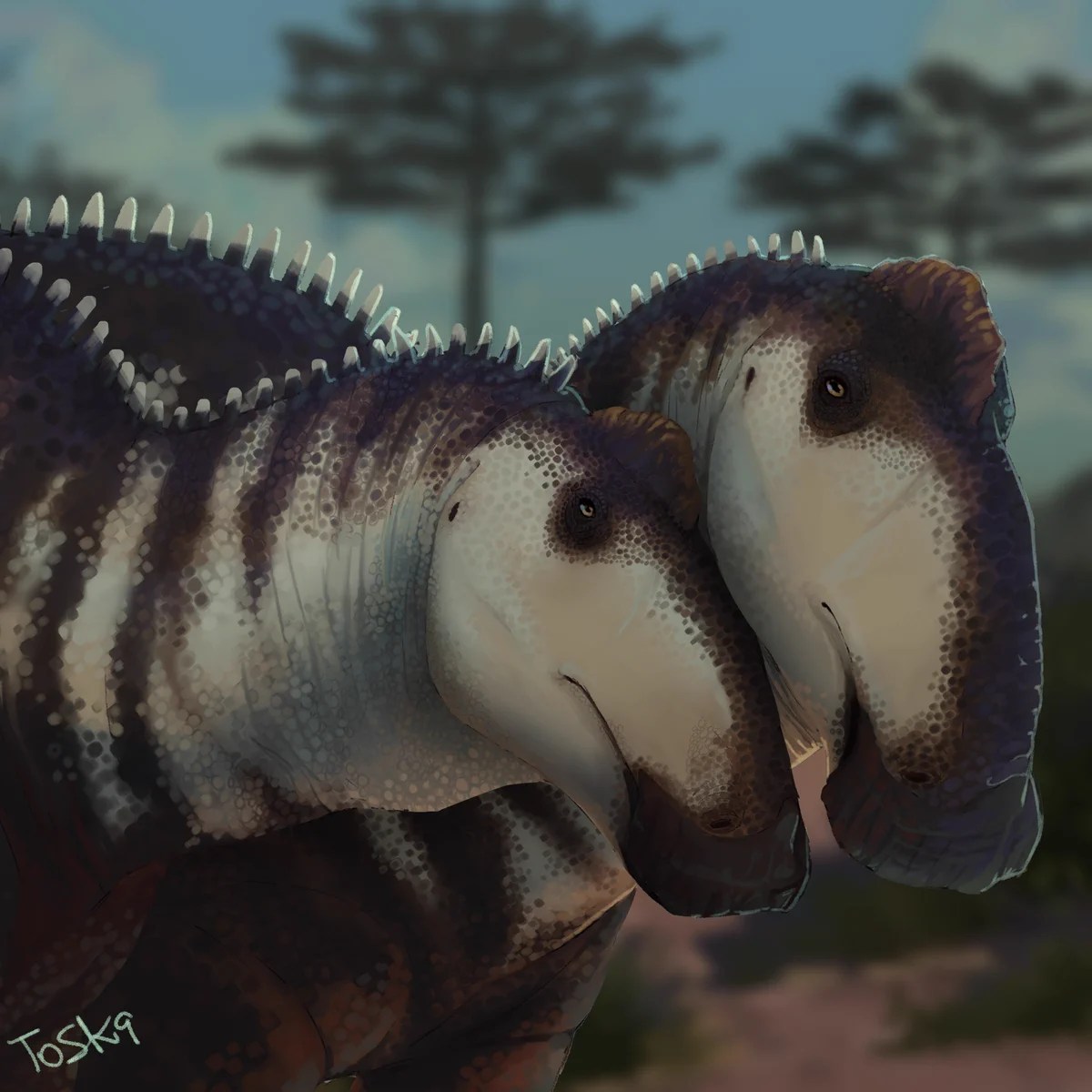
If you’ve ever noticed that two different versions of the North American Hadrosaur Edmontosaurus exist, you aren’t imagining things. Some depictions of Edmontosaurus feature a tiny crest atop its head, and others feature a “bald” version of the same dinosaur. Even more strange is the fact that both versions of Edmontosaurus are correct.
Allow me to explain why this is the case.
For a century, Edmontosaurus was believed to lack an elaborate head crest. While many Hadrosaurs (such as fellow North American species Parasaurolophus and Lambeosaurus) sported intricate, bony displays at the top of their heads, fossils of Edmontosaurus notably lack such a feature. Despite dozens of Edmontosaurus specimens being discovered in Canada and the United States between the late 1800’s and early 2010’s, none preserved any trace of a crest.
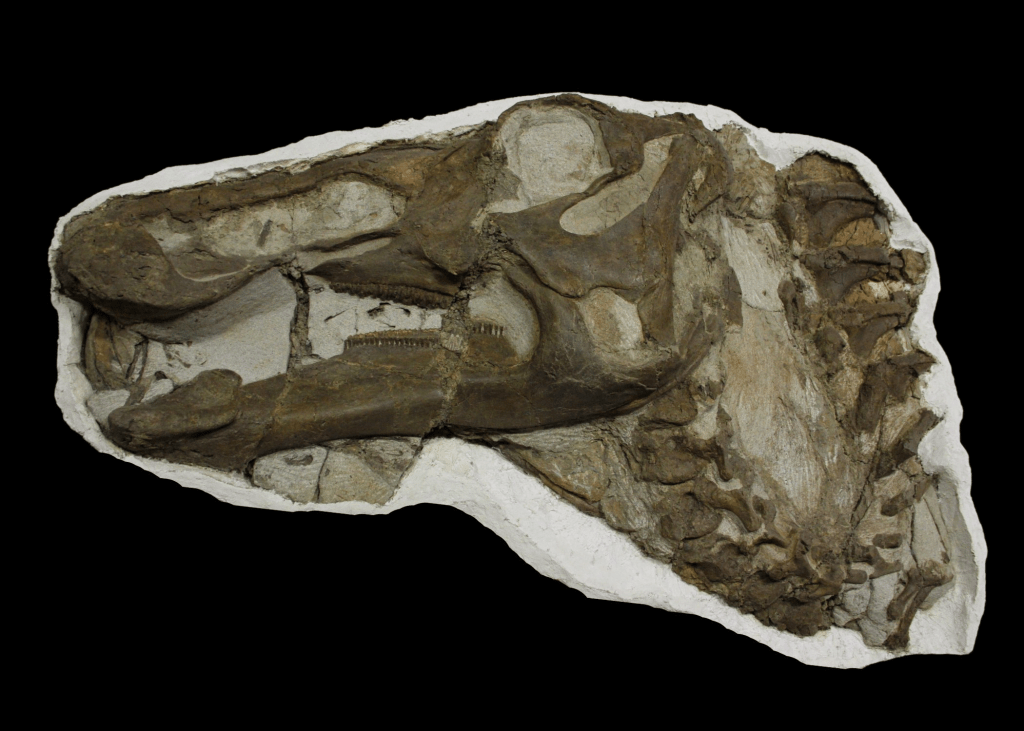
That changed in 2013 with the discovery of an Edmontosaurus “mummy” from the Wapiti Formation of Northern Alberta. Although largely incomplete, the specimen UALVP 53722 preserves a good patch of the dinosaur’s skin and an integument atop its skull[i]. The curious structure’s wrinkled appearance led paleontologists to believe it was made from soft tissues, something confirmed when CT scans revealed no bone was attached to the apparatus. Instead of a bony crest like other Hadrosaurs, UALVP 53722 proved Edmontosaurus had a fleshy comb akin to a chicken!

Paleontologists believe that the comb was used for socio-sexual signalling, perhaps indicating to receptive partners that the organism was sexually mature. This behaviour is reflected in modern birds, where species ranging from domestic chickens to Andean Condors use combs to display health to potential mates. Unfortunately, most bird species with combs have such structures on both sexes, preventing us from assigning a gender to the mummy Edmontosaurus. Nevertheless, the comb of Edmontosaurus highlights the relationship between dinosaurs and birds, even when the dinosaur in question wasn’t closely related to the lineage that became birds!
To Comb or Not to Comb?
So, Edmontosaurus did have a fleshy comb adorning their heads. If this is the case, why aren’t comb-less depictions of Edmontosaurus frowned upon?
The answer stems from the species of Edmontosaurus in the fossil record. Presently, two species of Edmontosaurus exist: E. regalis, the older species whose fossils are found in Canada and Alaska, and E. annectens, the younger species whose fossils mostly come from the midwestern U.S. but have also been found in the Canadian province of Saskatchewan. UALVP 53722 belongs to E. regalis and is currently the only mummified individual of this species. Numerous E. annectens mummies have been found – some with extensive skin impressions – yet none preserve any trace of a crest. Based on these fossils, E. annectens appears to have been comb-less, explaining the presence of two different Edmontosaurus variations in paleomedia reflecting the two Edmontosaurus species.
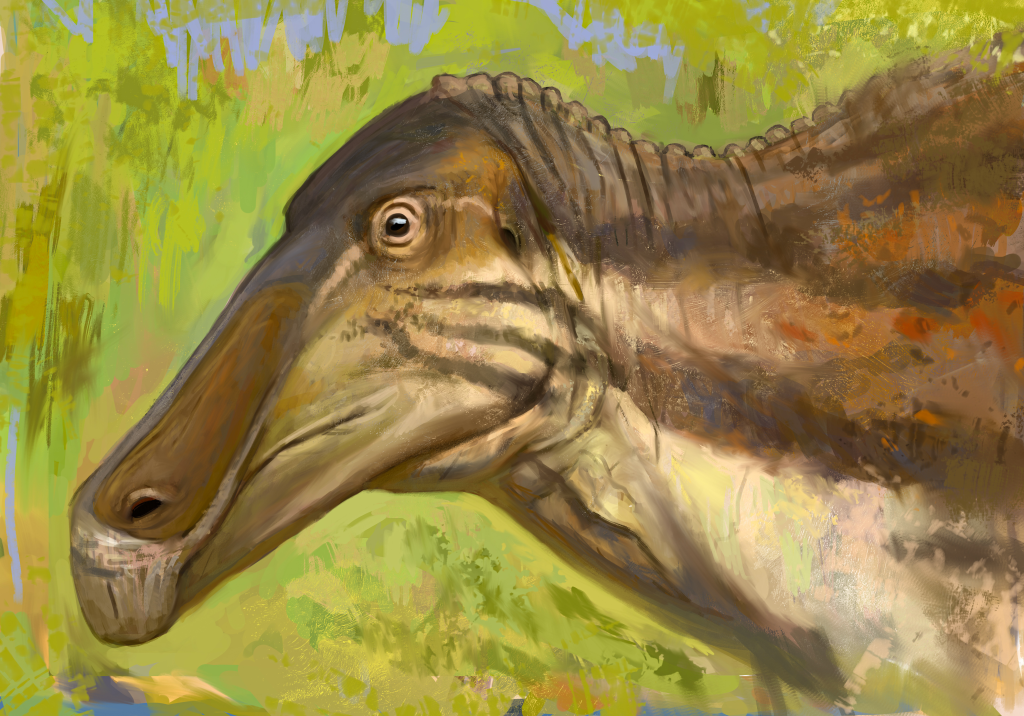
It should be noted that there are reasons to believe E. annectens may have had combs. First, while scales are rarely preserved in the fossil record, they are far more likely to fossilize than fleshy adornments. The fleshy combs of E. annectens mummies may have desiccated quickly after their death, ensuring they would not be preserved alongside the rest of the animal. Second, fossil preparators working on the mummies may have removed the comb in the excavation process, as proposed by the team that described UALVP 53722. While no definitive evidence exists to support the presence of combs on E. annectens, the absence of evidence does not necessarily mean evidence of absence. (Thanks, Dr. Sagan!). So, while no current evidence exists to support E. annectens having a coxcomb crest, the possibility is still plausible.
The Hidden Ornamentation of Hadrosaurs & Other Dinosaurs
The comb of E. regalis has forced paleontologists to consider if other Hadrosaurs sported similar appendages. During the late Cretaceous, the Hadrosaur family was divided into two lineages. The first were the Lambeosaurines, whose members (such as Lambeosaurus and Parasaurolophus) sported extreme head crests formed from their premaxilla and nasal bones. The second lineage was the Saurolophines, the family that includes Edmontosaurus and were believed to have a mix of bony-crested and crestless species.
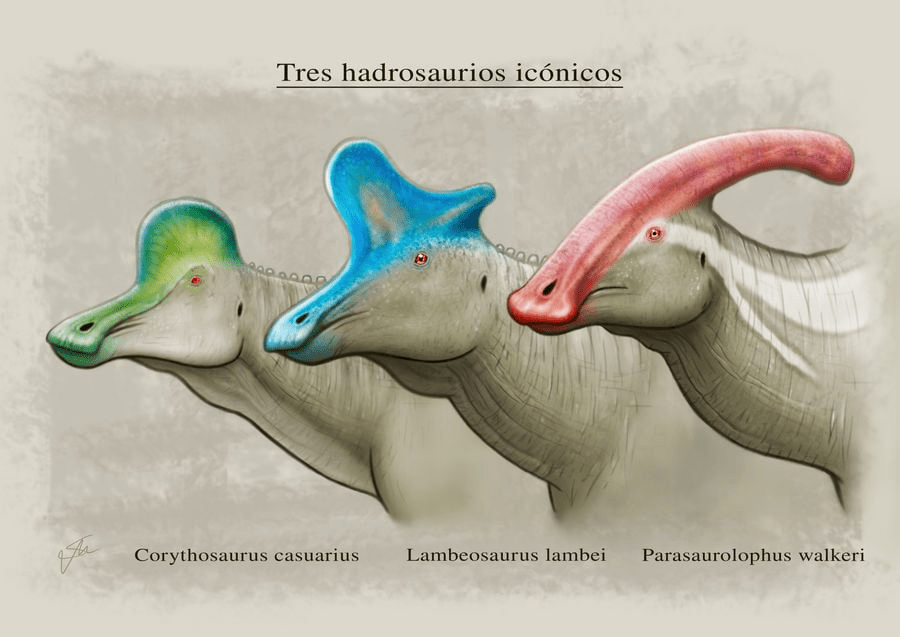
Yet the comb of Edmontosaurus has made paleontologists reconsider this assessment. Did seemingly crestless species, like the 13-tonne behemoth Shantungosaurus, also possess fleshy adornments? It’s possible. Crests were clearly used as socio-sexual signalling devices across the Hadrosaur lineage, so their absence in a handful of species is curious. Unfortunately for paleontologists, the presence and appearance of these structures are impossible to predict from just bone, meaning the true extent of these appendages will remain unknown until more specimens are discovered.
If the fleshy comb of Edmontosaurus demonstrated anything, it’s that paleontologists and paleoartists may underestimate the extent of dinosaur ornamentation. Modern dinosaur media tends to be more liberal (look no further than All Yesterdays), but the tendency to make dinosaurs more reptilian in appearance still persists. It may be intimidating to draw dinosaurs with the pouches, combs, and wattles (throat flaps) of modern birds, but it is becoming more apparent that this is just what dinosaurs looked like. If paleoartists want to continue to make more interesting (and more accurate) dinosaurs, adding some extra integument would go a long way!
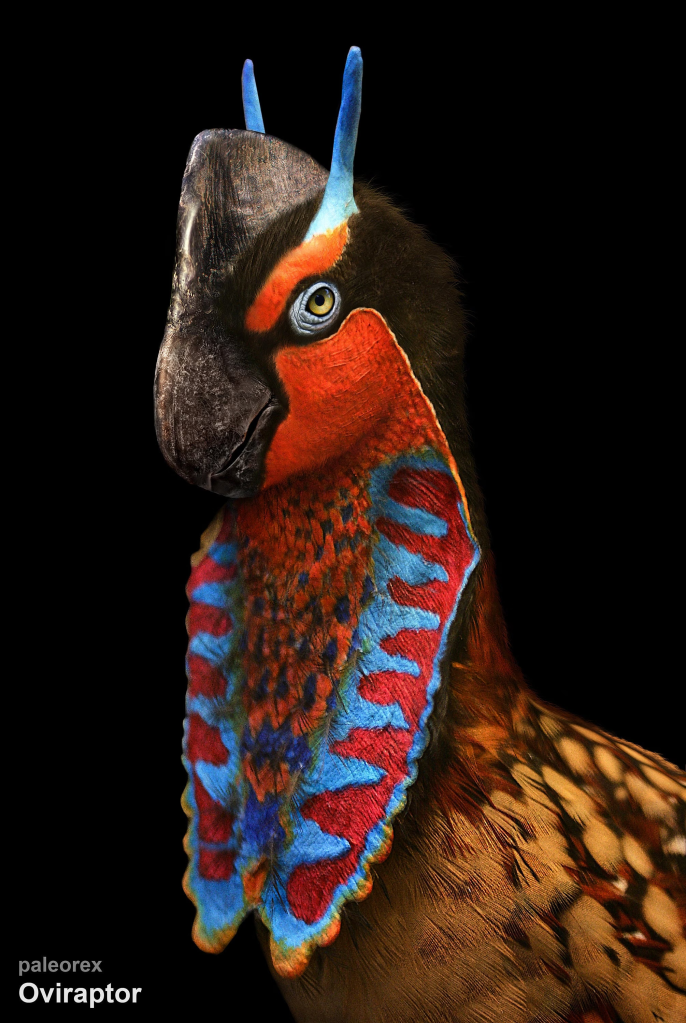
Now, all we need is a version of T. rex with this ornamentation, and the entire world will explode!
By world, I mean Twitter for about 2 days.
Thank you for reading today’s article! It turns out that mummified dinosaurs can tell us a lot about their appearance and anatomy. Luckily for paleontologists, more dinosaur mummies exist, including the Hadrosaur Brachylophosaurus, the Ornithopod Thescelosaurus, and the Ankylosaur Borealopelta. For more about these fantastic fossils, check out “A Beginners Guide to Mummified Fossils: Part Two” here at Max’s Blogosaurus!
I do not take credit for any image found in this article. The header image comes courtesy of @weird_dog_thing on twitter, whose account can be found at the link here
Works Cited:
[i] Bell, Phil R., et al. “A mummified duck-billed dinosaur with a soft-tissue cock’s comb.” Current Biology, vol. 24, no. 1, 2014, pp. 70–75, https://doi.org/10.1016/j.cub.2013.11.008.
 Max's Blogo-Saurus
One reply on “Was Edmontosaurus a Comb-Crested or Flat-Headed Hadrosaur?”
[…] feature for display or to combat other Maiasaura. In life, it may have been enlarged by a keratinous extension, turning it from a relatively muted feature into a far more prominent […]
LikeLike