After almost 20 years, changes are coming to the Royal Ontario Museum’s main fossil gallery.
Rumours of a potential switch-up first came in August, when members of the Max’s Blogosaurus team attended a lecture hosted by ROM curator of vertebrate paleontology Dr. David Evans. While Dr. Evans did not mention a potential update, some members of his research staff hinted that something big could be coming to the fossil hall. It seemed like any potential projects would occur sometime in the distant future, potentially in 2024 or later.
Yet, just over three months later, the beginnings of change are starting to take shape!
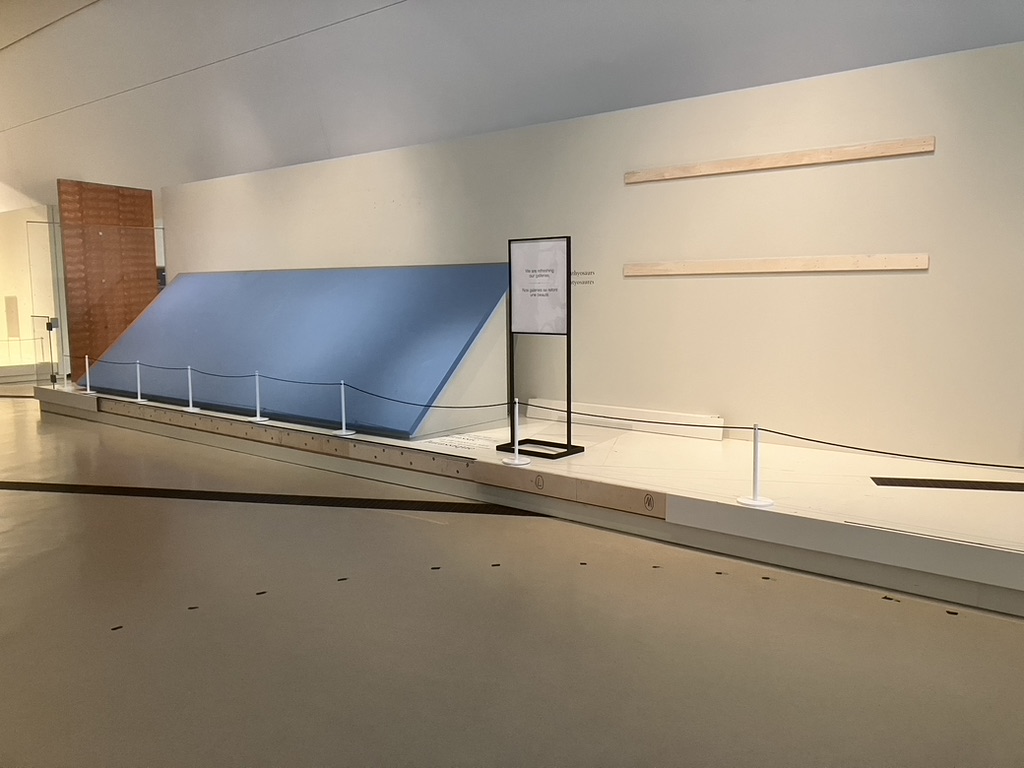
Earlier this week, a source at the ROM notified me that large sections of the fossil gallery had been removed. Wanting a firsthand glimpse of the renovations, I journeyed to the Temerty Gallery of the Age of Dinosaurs before participating in a fossil preparation clinic hosted by the ROM. What I found corroborated my source; almost every marine reptile fossil was removed, alongside a hanging specimen of the Pterosaur Quetzalcoatlus, the Tyrannosaur Albertosaurus, and a few fish and mammal fossils. Some absences were quite jarring, as areas once full of Ichthyosaurs and marine crocodiles are now devoid of all specimens:

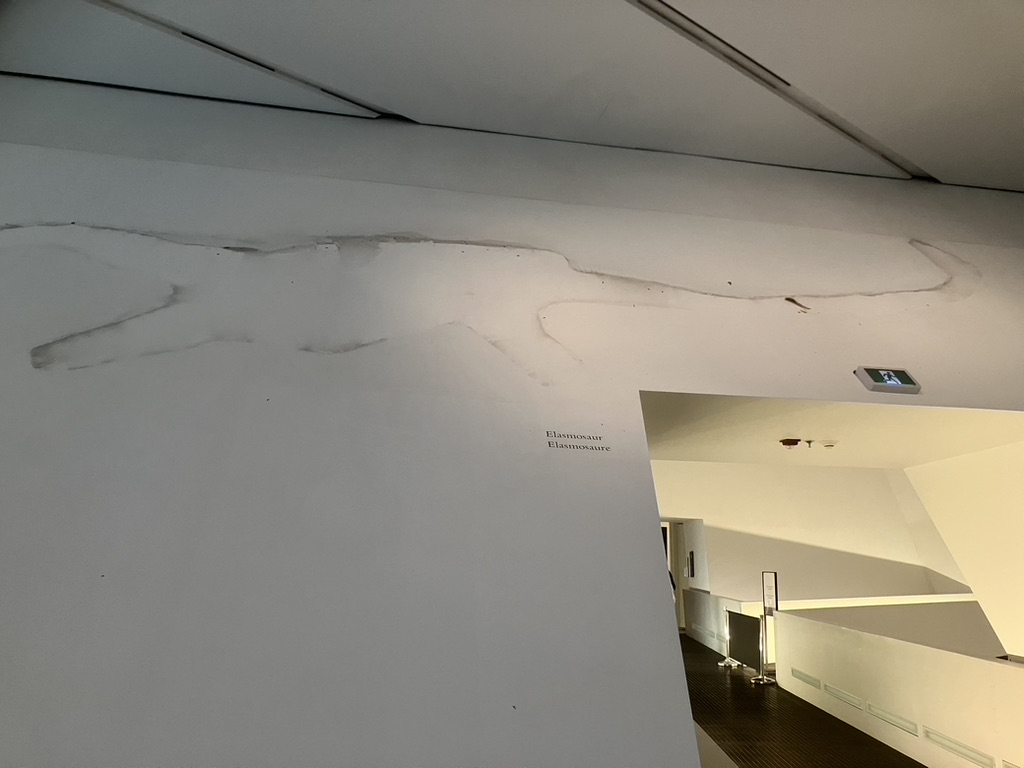
Others are humorous, namely the greasy outline of an Elasmosaurus that shows the difficulty of cleaning structures located 5 meters up:
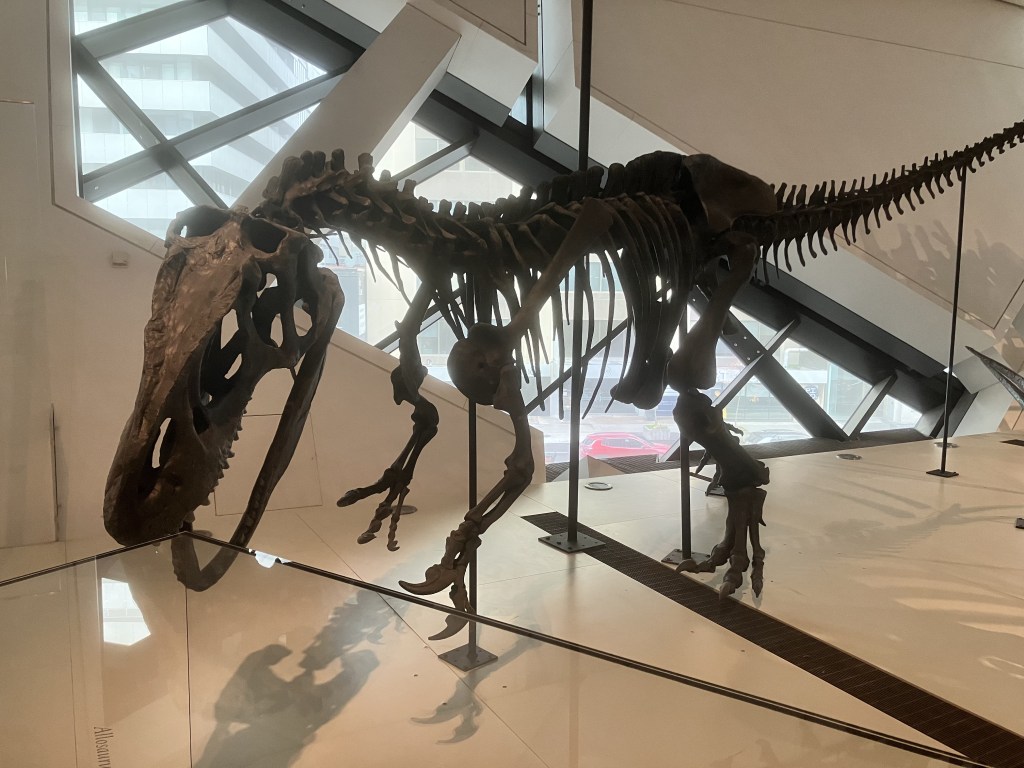
Even more jarring are the subtle alterations that have already occurred. In the portion of the gallery dedicated to the Jurassic Period, the skeletal mount of an Allosaurus has been removed and replaced by an updated version. This Allosaurus is now positioned in an active lunging motion, creating a vibrant display that makes it feel as though the Allosaurus is about to bite your face off!
The changes to Allosaurus may be symbolic of what is to come for the fossil hall. The shape of the ROM’s Michael Lee-Chin crystal presents a massive organizational challenge for museum staff. When designed by German architect Daniel Liebeskind in the early 2000s, the crystal represented one of the most difficult engineering projects in North America because of its complexity and methods. The sleek, minimalist design has restricted open space, preventing the installation of large mounts that feature scenes of multiple genera interacting with one another. Because of this, ROM curators are limited to reorganizing existing specimens into more fluid and dynamic postures, adding a new level of realism to the ROM’s galleries.
All this is not to say that adding new elements is impossible, however. David Evans’ tenure as curator of vertebrate paleontology has been remarkably successful, resulting in the publication of numerous new dinosaur species since his appointment. Given the plethora of discoveries the ROM has made in the last decade, it would follow that the improved gallery could feature a few. Three dinosaurs discovered by Evans – the armoured herbivore Zuul crurivastator, the ceratopsian Wendiceratops, and the raptor Acheroraptor – all represent sensible candidates for addition.
Wendiceratops especially seems destined for display within the fossil hall. For half a decade, Wendiceratops has occupied a distinct portion of the Temerty Gallery that is now vacant of its remains. In their place is a bizarre mystery fossil that numerous paleonerds (including myself) have had difficulty identifying. While it was suggested that the fossil may represent a hip or limb, the presence of teeth indicates a marine reptile skull. For now, we believe the mystery animal pictured below is an Ichthyosaur (Cymbospondylus sp.), but if you have any insights, please leave a comment!

The renovations to the ROM’s fossil gallery are an encouraging step forward for the museum. While there was nothing inherently wrong with the existing displays, it had become clear in recent years that updates were needed for the gallery to stay relevant. The installation of the contemporary Dawn of Life gallery – which presents life before the dinosaurs in a sprawling, beautiful manner – accentuated the flaws of the Temerty Gallery. Ultimately, change was needed to keep up with Dawn of Life, though the extent of these changes remains to be seen…for now, at least!
Thank you for reading today’s article! If you have any passion or interest in prehistory, I STRONGLY recommend going to the ROM’s Dawn of Life gallery. Located on the museum’s second floor, this permanent gallery takes viewers on a trip through time to see how life has progressed on our planet. From our last common ancestor to the extinction of the Trilobites in the Permian Extinction, Dawn of Life is an informative and gorgeous exhibit that never becomes dull. In all honesty, it may be the best gallery of prehistoric life that I have ever had the pleasure of visiting! For more information, check out my official review here at Max’s Blogosaurus.
All Images come courtesy of the Royal Ontario Museum, though taken by myself.
 Max's Blogo-Saurus
One reply on “An Update to the Royal Ontario Museum’s Fossil Gallery?”
[…] November 2023, I wrote an article describing several noteworthy changes I observed taking place in the fossil gallery of Toronto’s Royal Ontario Museum (ROM). At the […]
LikeLike