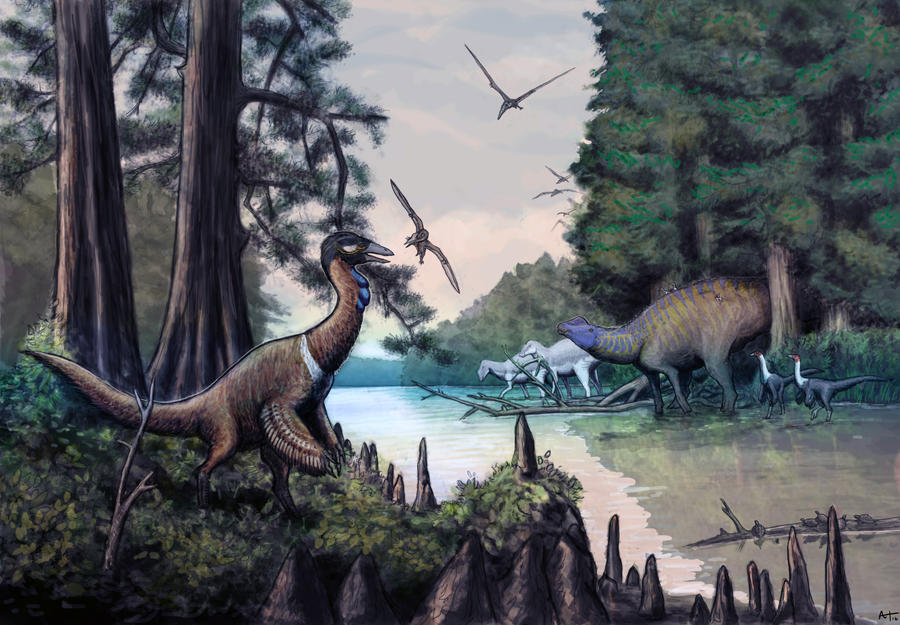
The first dinosaur discovered in the United States was not a Tyrannosaurus rex in the badlands of Montana. Nor was it an Allosaurus or Stegosaurus from the arid terrains of Utah or Colorado. Instead, it was Hadrosaurus, a nondescript genus of duck-billed dinosaur excavated in 1858 in New Jersey, located on the country’s East Coast.
Score 1 for the East and 0 for the rest of the continent. A good start, right?
Unfortunately, this early lead would not last. In the 1870s, paleontologists such as Othniel C. Marsh and Edward Drinker Cope began expeditions to the American Midwest, discovering legendary species such as Allosaurus, Stegosaurus, Diplodocus and more. Their work set the stage for dinosaur paleontology in the USA, with states like Montana, Utah, Wyoming, and Colorado becoming hotspots for dinosaur research. Other western states – such as New Mexico – alongside the Canadian provinces of Alberta and Saskatchewan would join this list in subsequent years, turning Western North America into a dinosaur goldmine.
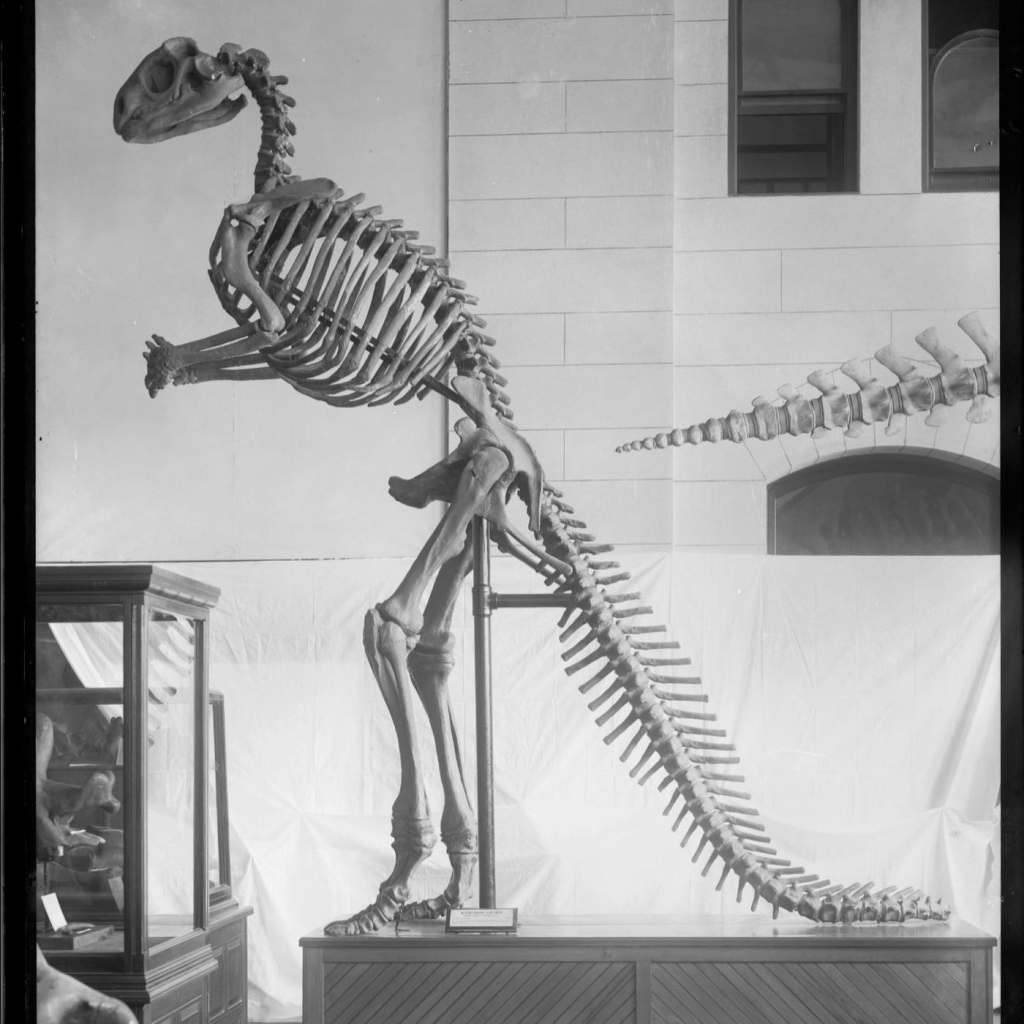
On the other hand, dinosaur fossils from the East became elusive. The number of dinosaur fossils and species from the east coast is a fraction of those found elsewhere in North America. The few dinosaur fossils from the region are fragmentary and disarticulated, providing a poor picture of life during the Mesozoic. The North American East has clearly experienced something of a dinosaur drought – but why is this the case?
The first reason for this paleontological famine involves the sedimentology of the region. Eastern North America is famous for the Appalachian Mountains, which formed over 480 million years ago and have been shrinking since the breakup of Pangea 220 million years ago. In the millions of years since, the landscape has experienced high levels of weathering and erosion, thus making the fossilization of terrestrial organisms very difficult due to a lack of sediment deposition.
In order to fossilize, the bodies of extinct animals must be concealed by sediments before the elements and other organisms affect their remains. In landscapes with high levels of erosion, sediment is rarely deposited quickly in high quantities, thus preventing the rapid burial of dead organisms. While this is an issue in most terrestrial ecosystems, erosion and weathering are amplified in mountain settings, meaning very few dinosaurs could fossilize during the Mesozoic in this region. For those lucky few that did fossilize, the erosion and weathering wouldn’t have stopped after their formation, leading to their exposure and disintegration long before paleontologists could discover them.
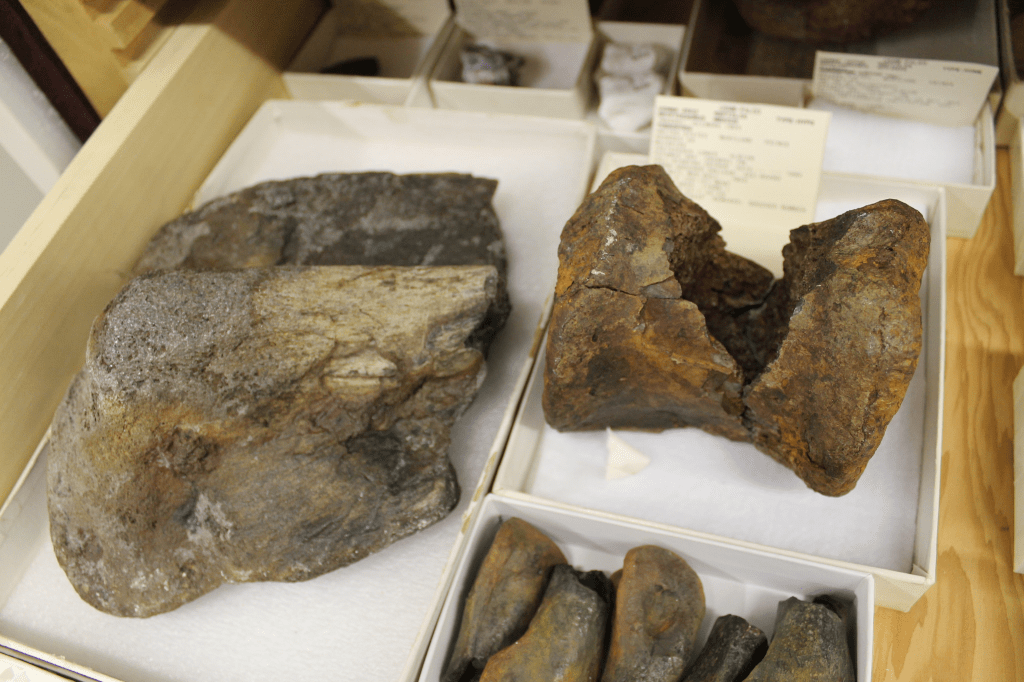
The lack of deposition across eastern North America has resulted in very few Mesozoic-aged sites from terrestrial settings. Most of the Jurassic period is not preserved in Eastern rocks, while most Cretaceous deposits comprise marine settings – more on that in a bit.
Confounding the lack of adequate rock formations is the modern terrain of the landscape. Much of the Eastern U.S. and Canada is covered in vast forests which overlay and damage fossils, making their identification at the surface nearly impossible. The terrain of the west – which is almost completely the opposite of the East – partially informs why the area has been a haven for paleontology. The eroding cliffs and exposed rocks at the surface have made life easier for paleontologists, while the topography of the east has done them no favours.
On top of the natural terrain is the added presence of human civilization. While western states like Montana and Wyoming are sparsely populated, eastern states have dense populations that have occupied the region for centuries. The development of the East has made fossil deposits even less accessible – it’s not like we can dig underneath a metropolitan area to find dinosaurs!
So, dinosaur fossils on the East Coast were either unable to form or have become inaccessible. Sounds pretty bad, right? Well, yet another factor may have contributed to the lack of Eastern fossils: an inland ocean.
At the dawn of the Late Cretaceous period, some 100 million years ago, North America became divided by a massive waterway known as the Western Interior Seaway. At its peak, the seaway connected the Arctic Ocean to the Gulf of Mexico and divided the continent into two landmasses: Laramidia to the west, and Appalachia to the east. The Western Interior Seaway drowned parts of eastern North America, including American states like Alabama and Kansas and the Canadian province of Manitoba. Since these locations were underwater, dinosaurs are rare in these deposits and only appear on the rare occasion that their bodies floated out to sea.
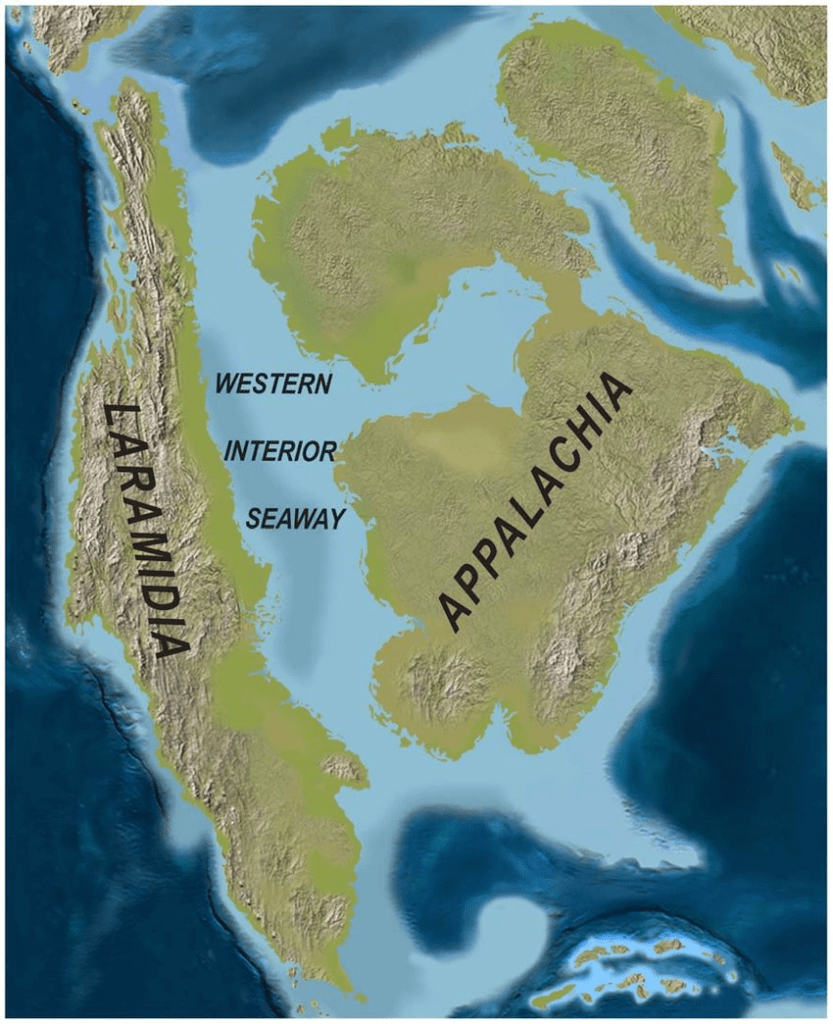
For the next 30 million years, the two landmasses would remain separate, resulting in vastly different dinosaurs calling them home. During the Campanian age of the Late Cretaceous period, between 83-72 million years ago, Laramidia was teeming with dinosaurs. Dozens of horned Ceratopsians and duck-billed Hadrosaur species roamed the continent, filling the role of top herbivores. Their predators were the Tyrannosaurids, early relatives of T. rex that comprised almost a dozen species. Other families that called the landscape home included the ostrich-like Ornithomimids, the armoured Ankylosaurs and Nodosaurids, beaked omnivores known as Caenagnathids, small carnivorous Dromaeosaurs (raptors) and Troodontids, and smaller bipedal herbivores known as Thescelosaurids and Pachycephalosaurids.
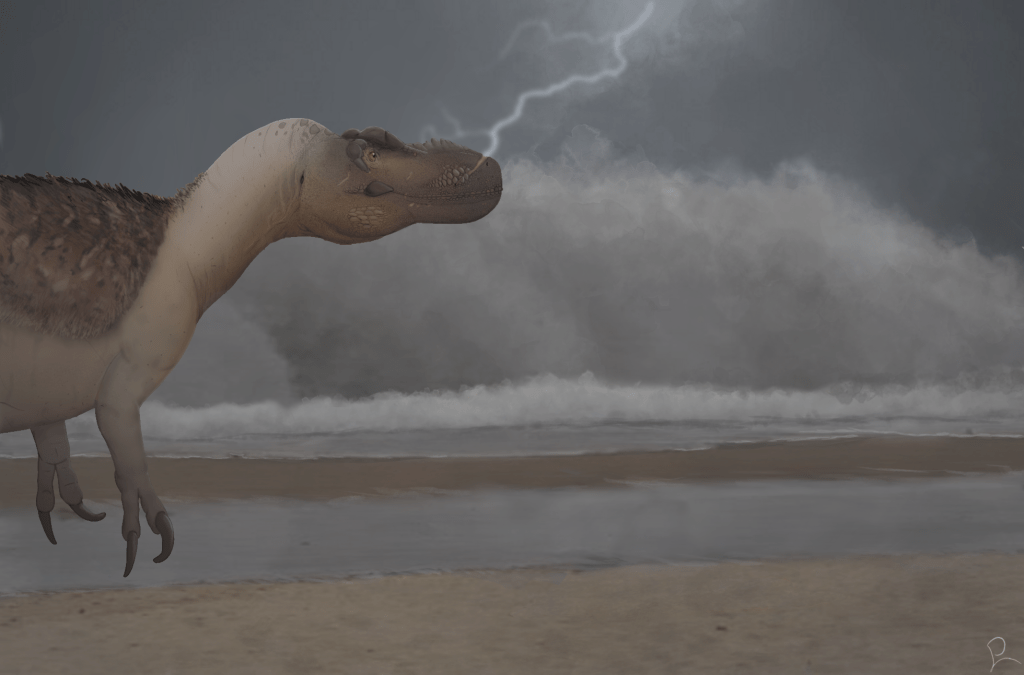
Most of these lineages were present in Appalachia, but differed from their Western counterparts. The Ceratopsians and Hadrosaurids found in places like New Jersey and North Carolina seem to be more primitive than the mass herds found in Laramidia. The endemic Tyrannosaurids – Dryptosaurus and Appalachiosaurus – are less derived than contemporary genera like Albertosaurus and Daspletosaurus, instead possessing traits found in older members of the lineage. Based on the fossil evidence, it appears that the dinosaurs of Appalachia were a primitive group whose evolution was a by-product of its isolation.
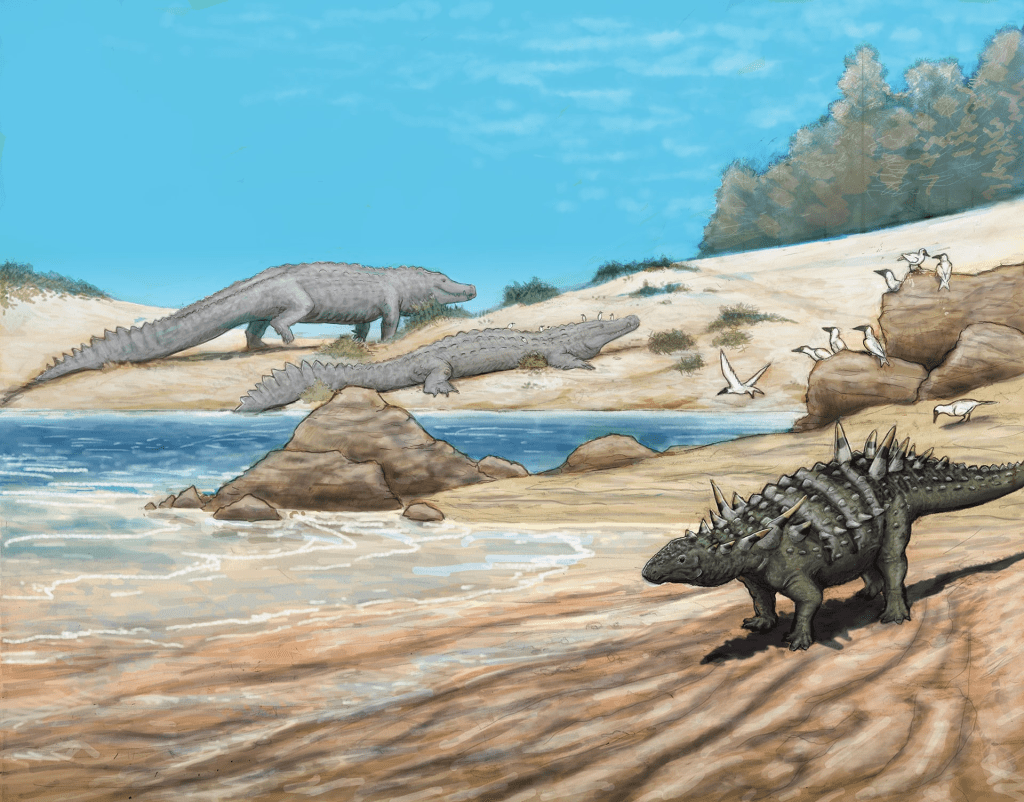
Ecosystems in both continents seem to have had similar faunal compositions, though Nodosaurids were far more diverse in Appalachia. Since fewer fossils are present in the East, some have questioned if more dinosaurs were living in Laramidia, though this gap is likely a result of preservation bias. However, one unorthodox piece of evidence exists to support this notion. Species of the crocodilian Deinosuchus found in Laramidia grew more than 10 meters in length and hunted dinosaurs. Those found in Appalachia were much smaller and were better suited to hunting animals like turtles[i]. This discrepancy may indicate that dinosaurs were more abundant prey in Laramidia, though the size of a prehistoric Alligator cannot be a definitive analog for dinosaur presence in the respective continents.
There is another, much simpler explanation for the low quantities of fossils in the East: a lack of scientific exploration. The dinosaur goldmine that is the American West has drawn the eyes of paleontologists since the days of Cope and Marsh, pulling them away from the potential fossils of the East. Why go through the pain of excavating dense forests in areas not known for dinosaurs when you can stub your toe on a dinosaur bone sticking out of the ground in the Badlands of Montana?
Given these obstacles, it shouldn’t be surprising that dinosaur paleontology in the East has paled with the rest of the continent. Yet not all is lost for the world of Appalachia, as a growing number of paleontologists have contributed to uncovering its lost history.
On December 28, 2023, researchers working out of Maryland described the first record of the giant carnivore Acrocanthosaurus in Appalachia[ii]. Acrocanthosaurus, a species of Carcharodontosaurid that lived before the formation of the Western Interior Seaway, was previously known from specimens in Wyoming, Oklahoma, and Texas, making its identification in Maryland a crucial milestone in understanding the distribution of dinosaur species in the mid-Cretaceous.
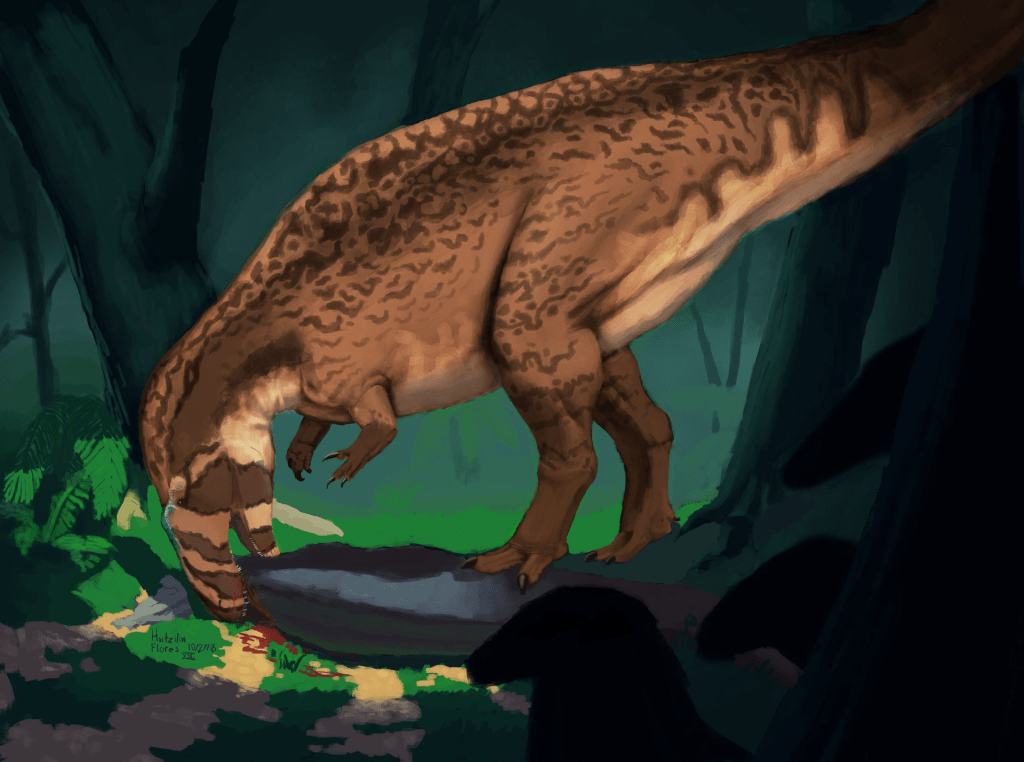
The Maryland site that contained the remains of Acrocanthosaurus – known as the Arundel Clay – is perhaps the best site for dinosaurs on the east coast. In the last few years, excavations in the Baltimore-based site have uncovered the remains of numerous dinosaur species, including the sauropod Astrodon, the dromaeosaur Deinonychus, and a species of Ornithomimid[iii]. The Arundel fauna matches contemporary sites found in western states, signifying that dinosaur diversity was similar throughout North America prior to the formation of the Western Interior Seaway. The diverging evolutionary pathways of the Appalachian and Laramidian dinosaurs likely resulted from the seaway’s formation, providing evidence for one key evolutionary idea: geographical barriers do wonders for speciation!
The Arundel Clay is not the only site for Appalachian species, as other fossils have trickled in from across the region since the turn of the century. Many have come from identifying specimens in museum drawers, including the 2016 discovery of a Ceratopsian jaw from North Carolina[iv][v] and the 2005 publication of Appalachiosaurus. These fossils, amongst others, have expanded our knowledge of Appalachian fauna, but their fragmentary and isolated nature has ultimately given paleontologists an incomplete glimpse of the continent’s dinosaurs.
So, while dinosaur paleontology in the lands formerly known as Appalachia has expanded in recent years, many questions remain. With further expeditions – and a lot of luck – we may soon know the secrets of America’s lost world.
Thank you for reading today’s article! The field of paleontology contains many mysteries, including one of the strangest animals to live on Earth, the Tully Monster. Was this aquatic creature a worm, a lamprey, or something else entirely? If you would like to know, read about it here at Max’s Blogosaurus!
I do not take credit for any images found in this article. All images come courtesy of the sources noted below or under each image.
Header image courtesy of Asher Elbein, found at his DeviantArt here.
Works Cited:
[i] Schwimmer, David R. King of the Crocodylians. Indiana UP, 2002, books.google.ie/books?id=0OsPJnC4CCwC&printsec=frontcover&dq=The+King+of+the+Crocodylians&hl=&cd=1&source=gbs_api.
[ii] Carrano, Matthew T. “First Definitive Record of Acrocanthosaurus (Theropoda: Carcharodontosauridae) in the Lower Cretaceous of Eastern North America.” Cretaceous Research, Elsevier BV, Dec. 2023, p. 105814. Crossref, https://doi.org/10.1016/j.cretres.2023.105814.
[iii] Frederickson, Joseph, et al. “Faunal Composition and Paleoenvironment of the Arundel Clay (Potomac Formation; Early Cretaceous), Maryland, USA.” Palaeontologia Electronica, Coquina Press, 2018. Crossref, https://doi.org/10.26879/847.
[iv] Gorvett, Zaria. The Mystery of North America’s Missing Eastern Dinosaurs. 3 Feb. 2023, http://www.bbc.com/future/article/20230202-the-weird-dinosaurs-of-americas-lost-continent.
[v] Longrich, Nicholas R. “A Ceratopsian Dinosaur From the Late Cretaceous of Eastern North America, and Implications for Dinosaur Biogeography.” Cretaceous Research, vol. 57, Elsevier BV, Jan. 2016, pp. 199–207. Crossref, https://doi.org/10.1016/j.cretres.2015.08.004.


2 replies on “The Lost World of Appalachia: Why are There so Few Dinosaurs in Eastern North America?”
[…] I’ve discussed in previous articles how preservation biases have impacted our knowledge of North American dinosaurs in the Late Cretaceous; was it possible such conditions also occurred in the Triassic? The answer seems quite possible. […]
LikeLike
[…] little is known about the Appalachian tyrants, largely because the poor preservation conditions in Eastern North America during the Late Cretaceous left few fossils behind. However, by the Maastrichtian stage of the Late […]
LikeLike