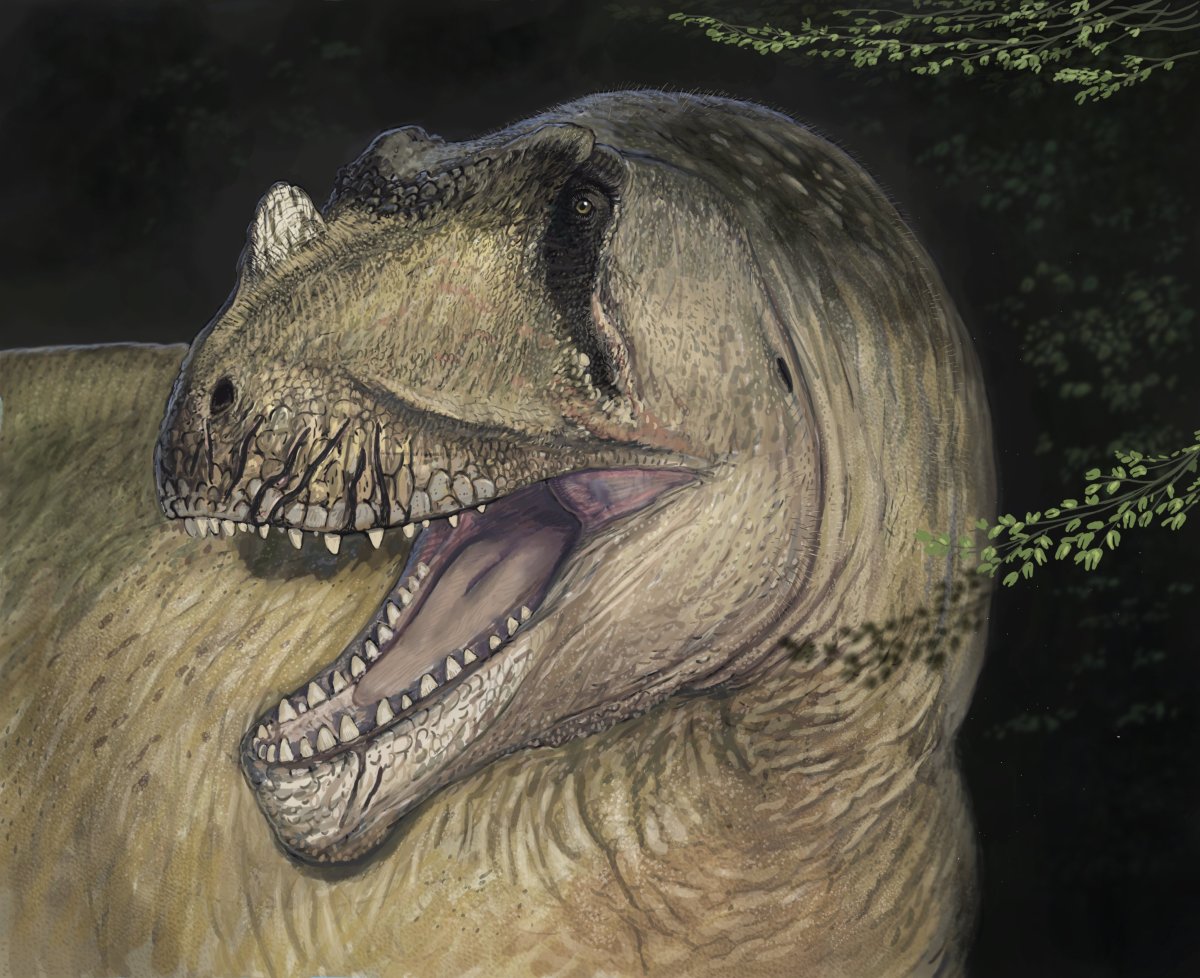
Re-examination of old records and newly discovered photographs has led to the discovery of a new large theropod genus from North Africa.
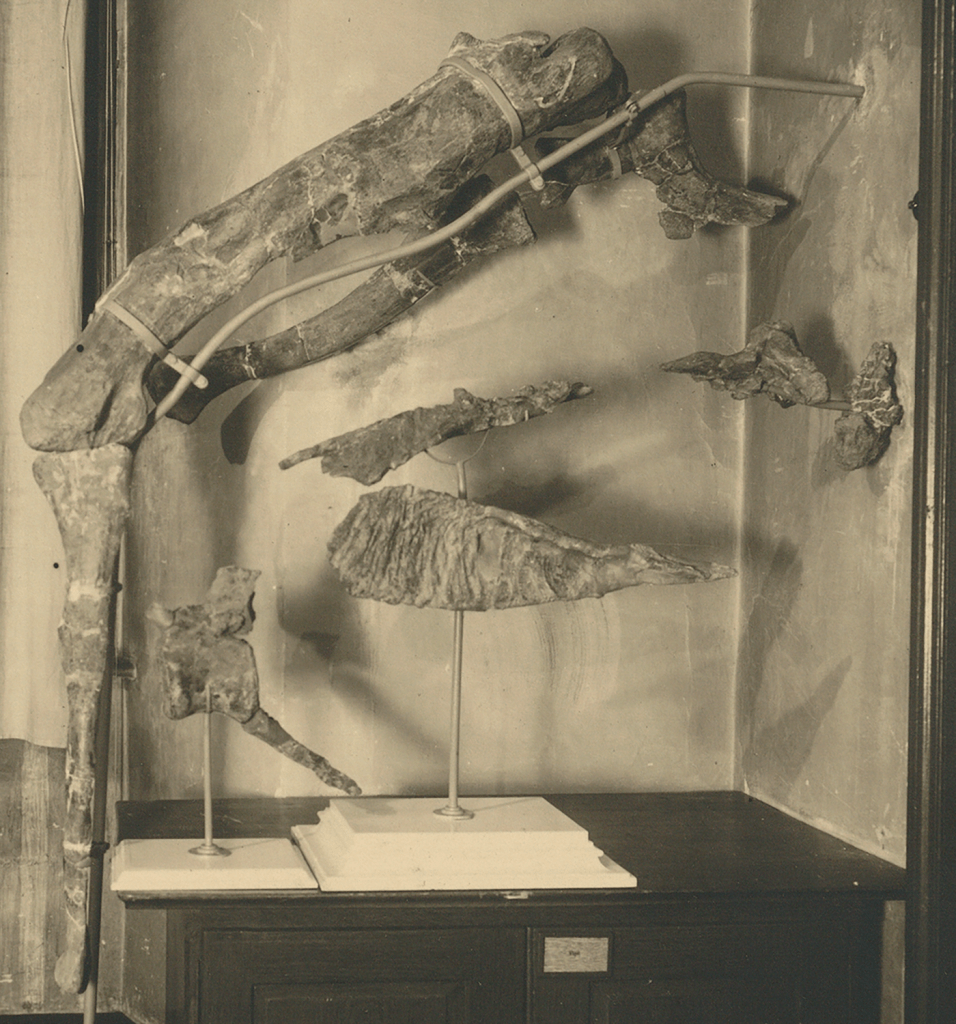
Named Tameryraptor markgrafi, fossils of the newly described theropod were first discovered over a century ago as part of German paleontologist Ernst Stromer’s expeditions to Egypt. In 1931, Stromer described the skeleton – SNSB-BSPG 1922 X 46, which consists of several skull elements and parts from the vertebrae, hips, and limb – as belonging to Carcharodontosaurus saharicus, a large theropod comparable in size to Tyrannosaurus rex. Unfortunately, Stromer’s Carcharodontosaurus bones were destroyed in 1944 from an allied bombing raid of Munich, resulting in our knowledge of the specimen being reduced to mere scraps of information found in journals and accounts from Stromer.
The good thing about scraps, however, is that you can put them together when you have enough.
That’s exactly what German paleontologists led by Maximilian (great name!) Kellermann of the Staatliche Naturwissenschaftliche Sammlunger Bayern (SNSB) were able to do[i]. Using the journal accounts, figures, and a photograph of specimen unearthed at the University of Tübigen, Kellermann’s team was able to compare the specimen with material of Carcharodontosaurus discovered elsewhere in Africa. This analysis included comparisons with the neotype – or specimen used to inform character traits in the absence of a holotype – of Carcharodontosaurus discovered by Paul Sereno in Morocco during the 1990’s, SGM-Din1.
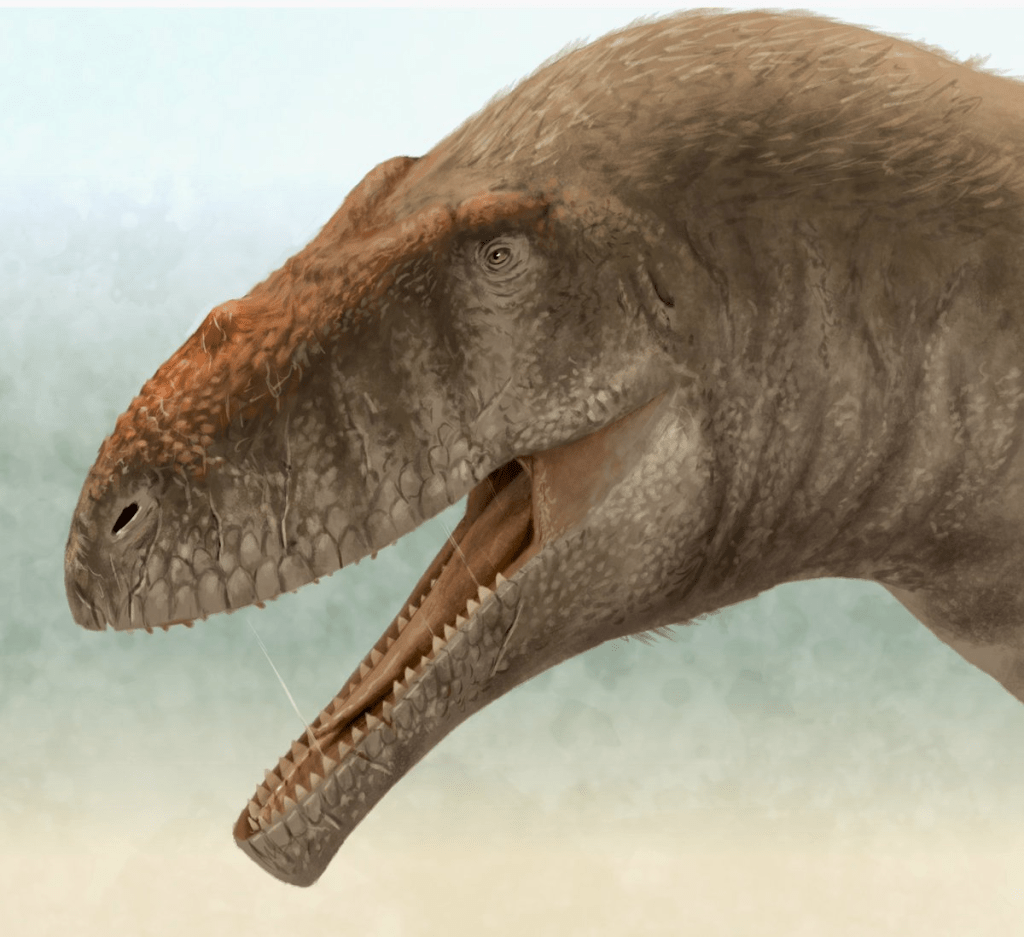
What they found was fascinating. The bones of the lost Carcharodontosaurus showed noticeable differences from the Moroccan specimens, most notably in their teeth and nasal bones. While the Moroccan specimens feature recurved, dagger-like teeth, those of Stromer’s specimen are much more akin to their namesake: near-symmetrical and quite shark-like. While all Carcharodontosaurid nasal bones have some sort of rough surface present, Stromer’s specimen is unique for the presence of a crest. Though small (~3cm), the crest still may have served an important role for display and sexual selection in communities of the large predator.
While I think the crest’s size may be slightly exaggerated in some pieces of paleoart, it is nonetheless a fascinating feature of this dinosaur:

These distinctions led Kellermann’s crew to determine that Stromer’s specimen represented a separate species from the Moroccan Carcharodontosaurus, thus creating the genus Tameryraptor. Now, you may be wondering something important: shouldn’t the Moroccan Carcharodontosaurus be reclassified instead? After all, Stromer’s fossils are the fossils of Carcharodontosaurus we are all familiar with; shouldn’t the Moroccan dinosaur be renamed to Tameryraptor?
The answer, luckily, is no. Stromer’s specimen was never officially designated as the holotype or neotype of Carcharodontosaurus; instead, that distinction belongs to a handful of teeth also lost to history. Without this designation, the officially designated neotype – SGM-Din1 from Morocco – takes priority, thus leading to SNSB-BSPG 1922 X 46 becoming the holotype of Tameryraptor. These choices were done in accordance with the International Commission on Zoological Nomenclature (ICZN), an organisation that aids scientists with the scientific naming of species both living and extinct.
Take a deep breath, hardcore paleonerds; you don’t have to mourn both Carcharodontosaurus and Saurophaganax within the course of a month.
The implications of this study are immense. The identification of Tameryraptor confirms that Morocco and Egypt had different dinosaur faunas during the Late Cretaceous, challenging older views of a largely homogenous fauna across the Saharan Basin. This hidden diversity is likely the result of different ecosystems being preserved in places like Egypt, Niger, and Morocco, thus resulting in different dinosaur communities[ii]. While further analysis of these communities would be nice, examination of the Egyptian fauna will prove difficult, due both to the uncertainty of where Stromer’s excavations occurred and the fact that all his fossils have been destroyed.
It would certainly make things easier if they were still around!
The identification of Tameryraptor is nothing short of a miracle. Using nearly century-old writings and photographs, a team of paleontologists was able to name a new genus of dinosaur masquerading as a Ceratosaurus and with the teeth of a shark. In doing so, they have helped shed light on increased dinosaur diversity across North Africa during the Late Cretaceous, thus opening the door for further revaluations of other Carcharodontosaurid fossils found across the region.
While I may not be the biggest fan of naming new species on fragmentary remains – especially when said fragmentary remains are presently a pile of dust in Munich – I do understand the appeal of Tameryraptor. A derived Allosaur with a horn mimicking Ceratosaurus? That’s cool!
My only fear with this study is that paleontologists who study a certain other genus of large, North African theropod might feel inspired to perform similar analyses. In fact, I’m not worried that they might be undertaking such studies; I am worried that they’re mere moments away from publishing their results! So, when the bane of this website gets a new update that throws everything we knew about it into chaos, feel free to return to see my suffering!
For now, just enjoy the new (old), lost (found) Carcharodontosaurid Tameryraptor!

I do not take credit for any images found in this article. Header image courtesy of Joschua Knüppe.
[i] Kellermann M, Cuesta E, Rauhut OWM (2025) Re-evaluation of the Bahariya Formation carcharodontosaurid (Dinosauria: Theropoda) and its implications for allosauroid phylogeny. PLoS ONE 20(1): e0311096. https://doi.org/10.1371/ journal.pone.0311096
[ii] Ijouiher, J. (2022). The Desert Bones: The Paleontology and Paleoecology of Mid-Cretaceous North Africa. Indiana University Press.
 Max's Blogo-Saurus
4 replies on “Examination of Lost Carcharodontosaurus Bones Reveal New Horned Genus, Tameryraptor”
Back in 2014, I began writing an article comparing Stromer’s and Sereno’s Carcharodontosaurus remains, and I became convinced that they belonged to two entirely different genera. I felt that Sereno’s specimen from Morocco was actually an individual of the enigmatic Bahariasaurus, another large carnivore from Egypt. Unfortunately the article was never completed because I didn’t have the resources available to do the in-depth research that I wanted. I guess it’s all moot now.
LikeLike
I wouldn’t say it’s too late for your examination – after all, Bahariasaurus and its potential connection to Stromer’s Carcharodontosaurus fossils are not discussed within the paper. I’d love to hear your thoughts, even if they are just preliminary!
LikeLike
[…] This article includes a more complete description of Tameryraptor: https://maxs-blogo-saurus.com/2025/01/15/examination-of-lost-carcharodontosaurus-bones-reveal-new-ho… […]
LikeLike
[…] In January, the dinosauromorph Ahvaytum bahndooiveche was named from a single ankle bone, while the Carcharodontosaurid Tameryraptor was technically named from 0 bones, given that its remains blew up in WW2. Generally, it isn’t a […]
LikeLike